ADHD in Women: The Signs, the Late Diagnosis and What Helps
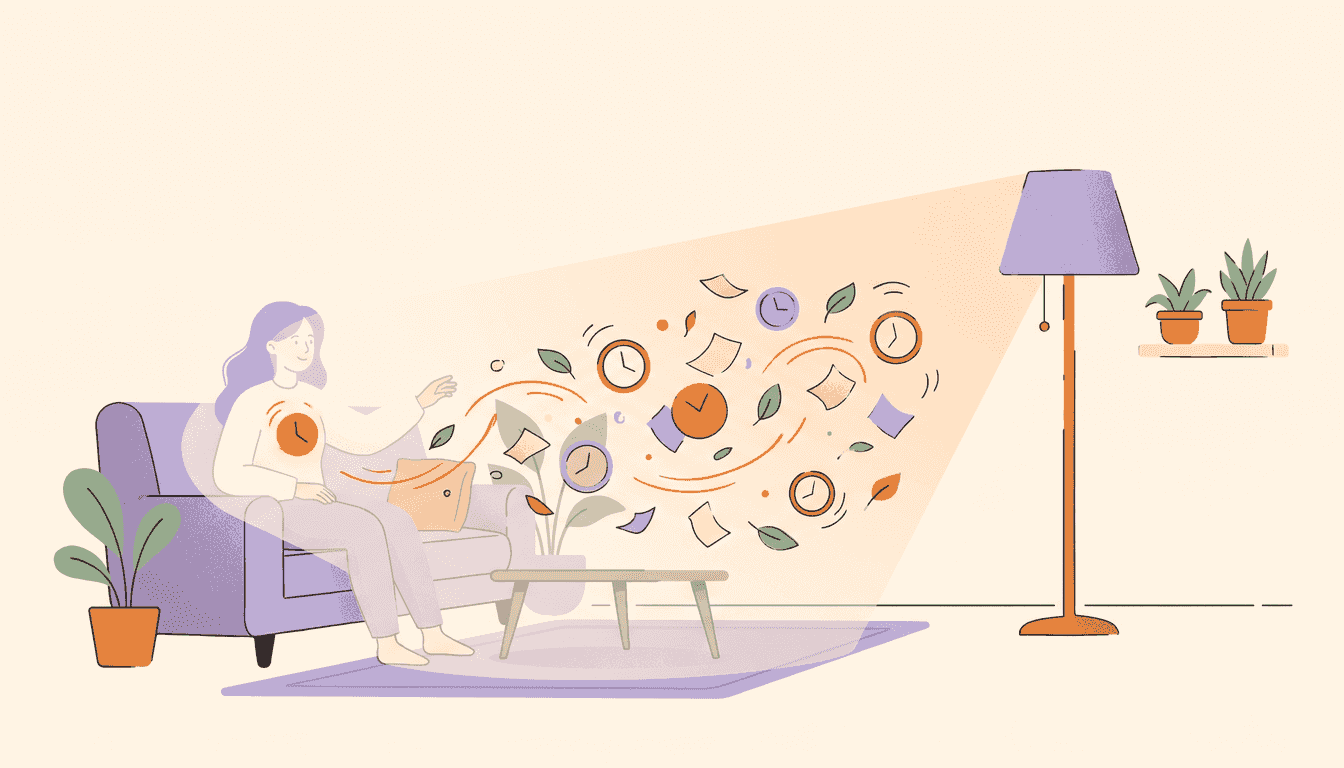
It is past midnight and you are on your third article about ADHD in women. You started reading for a friend, or for your daughter, or because a short video described your exact morning. Now you are going down the list of signs and quietly counting how many apply to you, and the number keeps climbing.
You have been treated for anxiety for years. It helped with some things. It never touched the part where whole afternoons disappear, where you notice at 4 pm that you never ate lunch, and where a text sits unanswered for a week because replying started to feel like a test you would fail. You are thirty-eight, and you cannot tell whether you are finally seeing something real or talking yourself into a convenient explanation.
This guide is for that moment. It covers how ADHD tends to show up in women, why it is so often found late, where hormones come in, and what to do with the recognition once you have it. It is not a diagnosis and cannot be one. Think of it as a map, with links out to deeper guides on each piece, so you can walk into a clinician's office knowing what to say.
What Does ADHD Look Like in Women?
ADHD in women most often shows up as inattention rather than visible hyperactivity: drifting focus, forgetfulness, disorganization, poor time sense and a restless mind under a calm surface. Because it is quieter, and because many women build strong coping systems, it is often missed in childhood and diagnosed in adulthood, sometimes after years of treatment for anxiety or depression.
ADHD is the same condition in women and men. It is a lifelong neurodevelopmental difference in attention, impulse control and self-regulation, and it does not appear out of nowhere at thirty-five. What differs is how it tends to present, how other people read it, and how much of it gets hidden. ADDA notes that women and girls more often show inattention than hyperactivity, which makes their symptoms easier to miss.
One honest caveat before going further. Almost every sign in this guide also appears in people without ADHD, and several overlap with anxiety, depression, thyroid problems, sleep disorders and perimenopause. Recognizing yourself is a good reason to book an assessment. It is not a result.
Why Is ADHD Missed in Women for So Long?
The classic picture of ADHD was built around boys who could not stay in their seats. A girl who stares out of the window, loses her homework and works twice as hard to keep her grades up does not interrupt anyone's lesson, so nobody refers her. She grows into a woman who is told she is bright but scattered, and who comes to believe that is simply who she is.
That pattern is well documented. In a 2014 review of ADHD in women and girls, physicians Patricia Quinn and Manisha Madhoo described girls' symptoms as more often inattentive and internalizing, noted that women tend to be older than men at diagnosis, and observed that girls and women may develop better coping strategies than males to mask their difficulties. They also made a point worth remembering: good grades do not rule ADHD out, because many girls hold their performance up by working harder than anyone sees.
A 2020 expert consensus statement on females with ADHD, led by clinical psychologist Susan Young, put the gap between diagnosed boys and girls down, at least in part, to lack of recognition and referral bias. The authors add that some girls and women become so skilled at camouflaging their struggles that their underlying problems are underestimated. They also point to the stack of demands adult women often carry at once: multitasking at work, running a household and parenting.
So for many women, recognition arrives in adulthood. In a 2023 national survey, the CDC found that more than half of US adults with ADHD (55.9%) received their diagnosis at 18 or older. For many women, the tipping point is not a new symptom. It is a change in load: a promotion, a baby, caring for a parent, or the loss of the external structure that school and family once provided.
Signs of ADHD in Women
These are patterns, not a checklist. What matters for an assessment is how long they have been there, how much they get in the way, and whether they show up across different parts of your life rather than in one stressful season.
- You lose time in both directions. An hour can vanish into one task, while ten minutes of waiting can swallow a whole morning. That is time blindness, and it is one of the most common and least discussed signs.
- Your mind is busy even when your body is still. The hyperactivity often moves inside: racing thoughts, a constant background hum, trouble winding down at night.
- Piles grow on the chair, the counter and the floor of the car, and they only make sense to you. There is a reason doom piles form, and laziness is not it.
- If you cannot see it, it stops existing. Food at the back of the fridge, bills in a drawer, friends you have not called in months. This is the out of sight, out of mind pattern.
- You realize mid-afternoon that you have not eaten. Focus drowns out hunger signals, which is why forgetting to eat is so common.
- Messages stack up unanswered. Not because you do not care, but because each reply feels bigger than it should. More on that in why you leave texts on read.
- The house is spotless before guests and quietly overwhelming the rest of the time. Cleaning with ADHD is its own executive-function puzzle.
- Feelings arrive fast and loud, and they take longer to settle than seems proportionate.
- You look calm and organized in public and are wrung out by evening. The composure costs more than anyone realizes.
- Starting is the hardest part, and a looming deadline is the only thing that reliably gets you moving.
If several of these feel familiar, look back further than the last few years. The NHS notes that ADHD symptoms usually start before the age of 12, even when nobody named them at the time. A report card that said "capable but easily distracted" can be more useful at an assessment than anything you remember about yourself.
Inattentive ADHD in Women: Why Quiet Gets Missed
Clinicians describe three presentations of ADHD: mainly inattentive, mainly hyperactive-impulsive, and combined. Women can have any of them. The inattentive presentation, though, is the one most associated with being overlooked, because it looks like a personality rather than a problem.
Inattentive ADHD tends to read as dreamy, scattered, a bit flaky, or "not living up to her potential." ADDA lists forgetfulness, daydreaming, disorganization, poor time management and internal restlessness among its signs. None of these disrupt a classroom or a meeting. They disrupt your own day, quietly, and you are usually the only one keeping score.
The other presentations get misread too. ADDA's list of hyperactive-impulsive signs includes impatience, talking a lot, speaking without filtering and acting before thinking, which in a woman is easily put down to temperament. Quinn and Madhoo note that inattentive women may be labeled with a persistent low-grade depression instead, and that women with combined symptoms may be mistaken for having bipolar disorder.
The label matters less than the pattern. If your attention has always been unreliable in ways effort cannot fix, that is the thing to describe to a clinician, whichever presentation it turns out to be.
Was I Misdiagnosed With Anxiety or Depression?
This is one of the most common questions late-diagnosed women ask, and the honest answer is often "partly." The Young consensus states that it is not uncommon for adults with ADHD to be treated for anxiety or depression first. It adds that women may be more likely to receive a primary diagnosis of an internalizing or personality disorder, which delays the right treatment.
A 2023 systematic review of ADHD in adult women by researchers Attoe and Climie describes the same pattern: women are often diagnosed with, and treated for, a co-occurring condition before anyone recognizes the ADHD underneath. The review notes that physicians tend to treat those other conditions first and sometimes overlook ADHD completely.
Here is the nuance that matters. Anxiety and depression are not always a wrong diagnosis. They often coexist with ADHD, and years of struggling without an explanation can produce them. Quinn and Madhoo report higher rates of both in girls with ADHD than in girls without it.
So the useful question for a clinician is less "was I wrong?" and more "is something else also going on?" The consensus statement recommends that people with treatment-resistant anxiety or depression be screened for possible ADHD. If your mood treatment helped but never reached the forgetting, the lost time and the constant overwhelm, say exactly that. Never stop or change a medication on your own; that belongs in a conversation with whoever prescribes it.
Masking, Burnout and the Cost of Looking Fine
Many women with undiagnosed ADHD are not visibly struggling. They are over-preparing, rereading every email, arriving early to hide how close they came to being late, and maintaining systems that need constant upkeep. That is masking, and it is one of the main reasons the condition stays hidden from teachers, partners and doctors alike.
Masking holds until the load outgrows it. A second child, a bigger job or a run of bad sleep can push a well-compensated system past what it can carry. What follows often looks like ADHD burnout: exhaustion that rest does not fix, a shrinking ability to cope, and the unsettling sense that you have forgotten how to do things you used to manage.
Attoe and Climie's review found that women living without a diagnosis often described feeling different, stupid or lazy, and blamed themselves for falling short. If that inner voice sounds familiar, the guide to whether it is ADHD or laziness takes it apart directly.
Emotions, Rejection and Why Everything Feels So Big
Emotional intensity is not part of the formal diagnostic criteria for ADHD, yet it is one of the things women describe most. The Young consensus notes that emotional lability and dysregulation may be more common or more severe in girls and women with ADHD.
Online communities point the same way. A 2026 analysis of Reddit posts by Joohee Seo, Lidia Zylowska and colleagues found that r/adhdwomen discussed emotional dysregulation and internalizing symptoms more often than the general r/ADHD community, and raised menstruation, pregnancy and menopause far more often. The authors are careful to say it compares two communities rather than women and men, but it is a useful snapshot of what women bring up among themselves.
Two patterns come up again and again. One is emotional dysregulation, where feelings arrive at full strength and take a long time to settle. The other is rejection sensitive dysphoria, an intense, painful reaction to criticism or perceived disapproval. Both respond to practical strategies, and both get easier once you stop reading them as a character flaw.
Can Hormones Make ADHD Worse in Women?
Many women notice their ADHD shifting across the month and across life stages, and the research is starting to catch up. The Young consensus states that symptoms may be exacerbated by hormonal changes during the menstrual cycle, pregnancy and menopause, while acknowledging that the evidence is still early and limited.
One of the more detailed small studies came from psychologist Michelle Martel's lab. Bethan Roberts, Tory Eisenlohr-Moul and Martel followed 32 young women for 35 days, collecting saliva samples and evening symptom reports. Lower estradiol, particularly alongside higher progesterone, predicted more ADHD symptoms the next day.
Symptoms rose around the start of a period and again after ovulation, when inattention was at its highest. It was a small community sample rather than women with diagnosed ADHD, so treat it as a lead, not a rule.
In daily life, that can mean a stretch of the month when focus, patience and time sense all slip at once, and the strategies that usually work feel useless. Quinn and Madhoo raised the possibility that ADHD medication may need adjusting across the cycle. That is a conversation for your prescriber, not a change to make alone.
Midlife is the other big shift. As estrogen fluctuates and then falls in perimenopause, many women find that systems which held for years start to leak, and some first wonder about ADHD at this point. We cover that in depth in ADHD and perimenopause.
Time Blindness: The Sign That Ties It Together
Lists of the signs of ADHD in women rarely lead with time, yet it sits underneath a surprising number of the others. The missed lunch, the late reply, the afternoon that disappeared, the laundry that sat damp in the machine for two days: each involves time passing while your attention was somewhere else.
Time blindness is not a separate condition. It is what happens when the executive functions that track time, hold a future moment in mind and switch between tasks are under strain. For women carrying a household's worth of invisible deadlines, it can be the piece that makes everything else feel unmanageable, and it is one of the most fixable. The time blindness strategies guide goes further than there is room for here.
What to Do If You Think You Have ADHD
None of these steps require a diagnosis to start, and none of them replace one. Pick the one that feels most doable this week.
Write your history down before the appointment.
Because ADHD symptoms usually begin in childhood, an adult assessment will usually ask about your early years as well as your life now. Note examples from school, work, relationships and home, and how long each pattern has been around. Old report cards, a parent's memories or a sibling's view can fill the gaps your own memory cannot. A page of specifics makes it much harder for an appointment to end at "everyone feels like that sometimes."
Name ADHD directly, especially if mood treatment only went so far.
If you have been treated for anxiety or depression and it helped with some things but not with focus, time or follow-through, say so plainly and ask whether ADHD has been considered. You are allowed to ask for an assessment by name. If the first clinician brushes it off, it is reasonable to look for someone experienced in assessing adult women, since the presentation is easy to misread.
Track your hard days for two or three months.
A one-line daily note of focus, mood, sleep and time sense, alongside your cycle if you have one, turns "some weeks are worse" into evidence. It helps you plan around low patches, and it gives a clinician something concrete. Keep it short so the tracking does not become one more system to fall behind on.
Move time out of your head.
If your internal clock is unreliable, hand the job to something outside it. A visible analog clock in the rooms you use most, a visual timer for focused work, alarms that mark transitions, or an app like TimeAware that plays a gentle chime or speaks the time at an interval you choose all do the same thing: they let you notice time passing without having to remember to check. Choose one and give it two weeks before judging it.
Put food, bills and messages where you can see them.
So much of ADHD in women runs through working memory that visibility does a lot of the work. Keep snacks on the counter instead of in a cupboard, put bills in a clear tray by the door, and keep one running list of people you mean to reply to. Small changes like these work with the out-of-sight pattern instead of asking you to become a different person.
Lower one household standard on purpose.
Many women carry inherited ideas about how a home should look and run, and ADHD makes those standards very expensive to meet. Pick one and lower it deliberately: paper plates on busy nights, clean laundry that lives in a basket, a ten-minute reset instead of a full clean. The point is to spend limited executive energy on what matters most to you, not on what you were told should matter.
Find people who get it, and give a diagnosis time to land.
Talking with other women who have ADHD can be the quickest way to feel less alone. ADDA runs online support groups for its members, and many areas have local or virtual groups of their own. If you do receive a diagnosis, expect mixed feelings.
Attoe and Climie found that many women felt real relief after diagnosis, alongside regret that it had not come sooner. Both reactions are reasonable. A therapist who understands adult ADHD can help you sort through them, and through the old story about yourself that the diagnosis rewrites.
Finding the Name Late Still Counts
Being diagnosed at thirty-five or forty-five can feel like being handed a map after walking most of the road without one. The relief is real. So is the ache of looking back at the years you spent calling yourself lazy, dramatic or too much.
The same review describes what often comes next. With an explanation in hand, many women reported becoming more understanding of themselves and less harsh about their past. The diagnosis does not erase those years, but it changes the story you tell about them.
You were not failing at an ordinary life. You were running it without the instructions, and you got further than anyone knew.
Whatever an assessment finds, the struggles you recognized here are real and worth support. Take your notes to a clinician, move as much of the load as you can outside your head, and let the next chapter run on systems built for the brain you have.
Frequently asked questions
What are the signs of ADHD in women?
Common signs include drifting attention, forgetfulness, disorganization, losing track of time, a restless or racing mind, emotional intensity, clutter that builds up, unanswered messages, and difficulty starting tasks until a deadline looms. Many women also mask these struggles, so they look organized in public and feel exhausted in private. None of these signs is diagnostic on its own; a clinician looks at how long they have been present and how much they affect daily life.
Why is ADHD diagnosed later in women?
Girls more often have inattentive symptoms, which are quieter and easier to miss than hyperactivity. Many also develop strong coping strategies that hide their difficulties, and expert reviews point to referral bias and lack of recognition. As a result, many women are not assessed until adulthood, often when work, parenting or hormonal changes increase the load beyond what their coping systems can carry.
Can ADHD be mistaken for anxiety or depression in women?
Yes. Expert guidance notes that it is not uncommon for adults with ADHD to be treated for anxiety or depression first, and women may be more likely to receive a primary diagnosis of an internalizing condition. These conditions can also coexist with ADHD. If mood treatment has helped but focus, time management and overwhelm remain, it is reasonable to ask a clinician whether ADHD has been considered.
What is inattentive ADHD in women?
Inattentive ADHD is the presentation where problems with attention, organization, memory and follow-through dominate, without obvious hyperactivity. In women it can look like daydreaming, losing things, missing details, poor time management and internal restlessness. Because it rarely disrupts anyone else, it is the presentation most often overlooked in girls and women.
Do hormones affect ADHD symptoms in women?
Research suggests they can. Expert consensus notes that symptoms may worsen with hormonal changes during the menstrual cycle, pregnancy and menopause, and small studies have linked lower estradiol to more ADHD symptoms. The evidence is still early. If you notice a monthly or midlife pattern, tracking it and sharing it with your clinician is the most useful next step.
Can a woman be diagnosed with ADHD in her 30s or 40s?
Yes. ADHD is lifelong, but many people are not diagnosed until adulthood; a 2023 CDC survey found that more than half of US adults with ADHD received their diagnosis at 18 or older. An adult assessment usually looks at your current difficulties and at evidence that symptoms were present in childhood, even if nobody recognized them then.
How do I get assessed for ADHD as an adult woman?
Start with your primary care doctor or a mental health professional and ask directly about an ADHD assessment. Bring written examples from childhood and adult life, any old school reports, and notes on how symptoms affect work, home and relationships. If possible, look for a clinician experienced in assessing adult women, since ADHD can present differently and is easy to misread.
This article is for education, not medical advice. For diagnosis or treatment, talk to a qualified clinician. How we research our articles