ADHD Object Permanence: Why Out of Sight Really Is Out of Mind
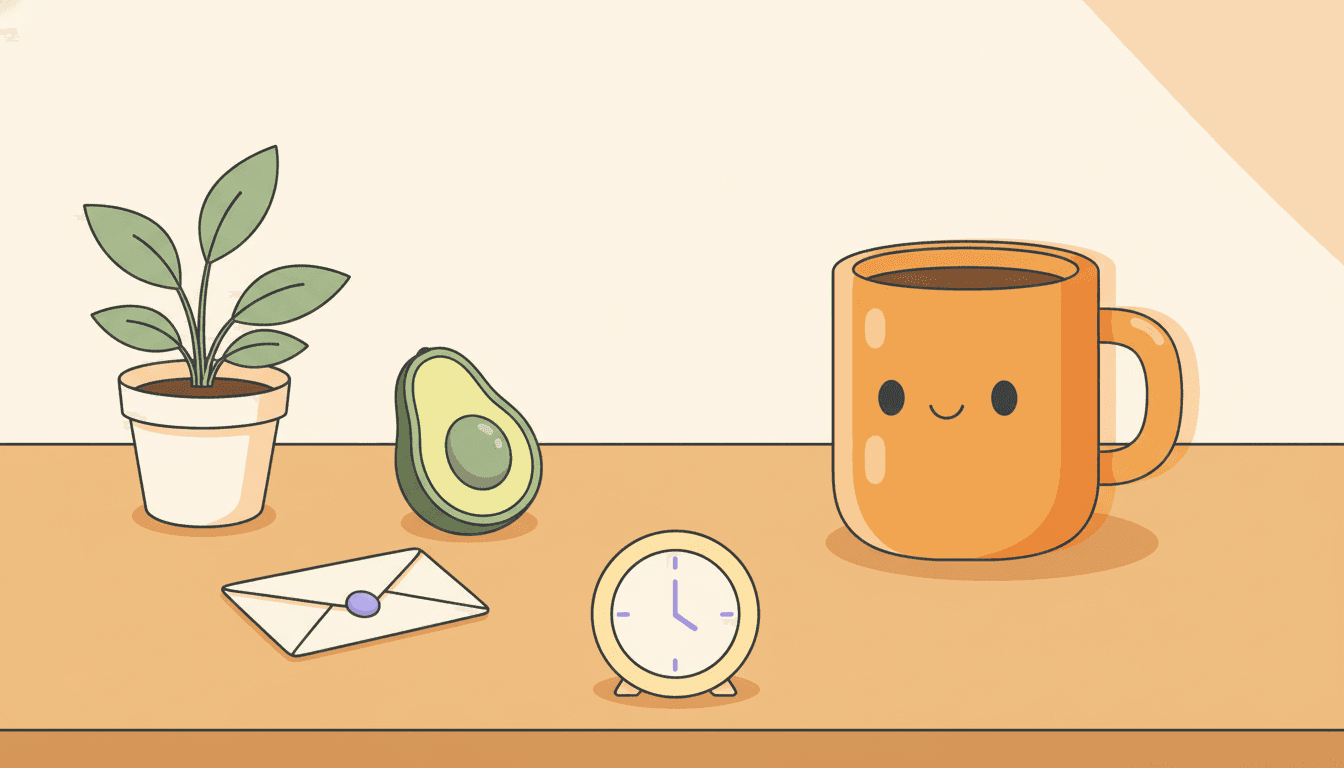
You love your best friend. You also have not replied to her last text. It has been three weeks. The thread is still open in your messages, but every time you glanced at the notification you were in the middle of something, and now there is a small guilty knot in your chest every time her name comes up. Nothing has changed about how you feel. What changed is that the moment you looked away, she got quietly filed under "not currently here", and your brain stopped serving her up.
What Is ADHD Object Permanence?
ADHD object permanence is the informal term for losing track of people, tasks, food, paperwork and even your own needs the moment they leave your line of sight. You know the thing still exists; your brain simply stops generating the background reminder that it does.
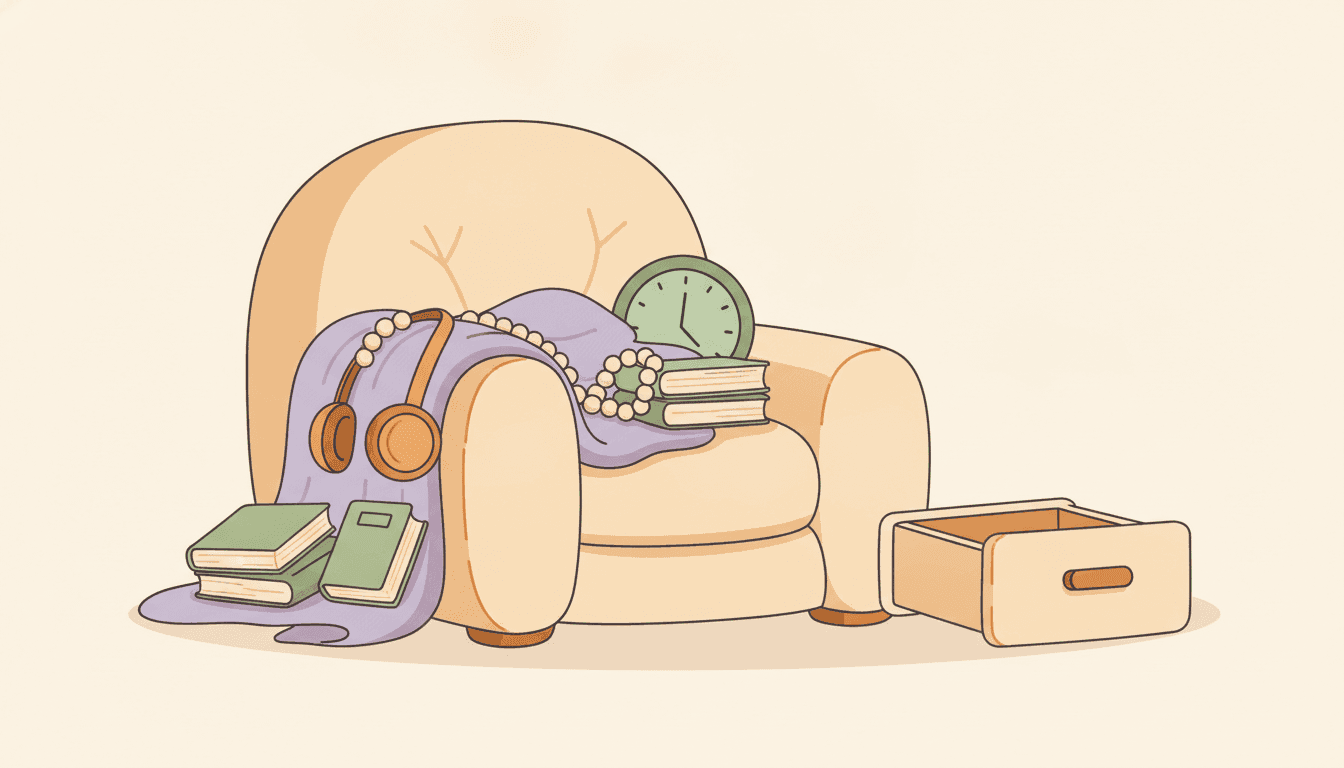
The result feels like memory loss but is closer to a missing screensaver: when nothing is on screen, nothing is on screen. It is not a medical diagnosis or an official DSM symptom. It is a metaphor adults with ADHD have collectively adopted to describe a very specific working-memory shortfall, one that turns the fridge into a graveyard, the laundry basket into a permanent fixture of the bedroom, and the people you love into a slow-building pile of unread threads.
The Neuroscience: Why Things Disappear From Your Mind
The mechanism is working memory. Working memory is the brain's mental whiteboard: the small set of things you can hold in active awareness without external help. Clinical psychologist Russell Barkley places working memory among the executive functions most affected in ADHD, and a 2025 review of cognitive impairment in adult ADHD found deficits in executive function, working memory and cognitive flexibility to be especially prominent and disabling in adults. When the whiteboard is small or wipes itself too often, anything not currently on it effectively vanishes.
The prefrontal cortex, the brain region that does the whiteboard-holding, tends to work differently in ADHD, and the chemical messengers that keep it humming, dopamine and norepinephrine, are signalled differently too. Without a steady signal, a thought has nothing to hold it in place. It rises, you notice it, it dissolves. By the time you remember to text your friend back, you are at a checkout counter and your hands are full of frozen peas, and by the time your hands are free you have forgotten again.
There is also a reinforcement piece. Barkley and others have shown that ADHD brains are unusually sensitive to delayed reinforcement: anything whose payoff is in the future is hard to keep active. Texting your friend pays off in a vague good feeling later. Folding the laundry pays off in a tidy drawer tomorrow. The fridge avocado pays off in not-spoiled produce next week. None of these have a now-shaped reward, so none of them stay on the whiteboard.
Common Patterns You Might Recognize
Most adults with ADHD have a personal map of where this hits hardest. A few of the usual ones:
- People. Friends you truly love but have not contacted in months. The relationship still feels real to you; the texting just stops the moment the conversation does.
- Food. Vegetables bought with the best intentions, lost behind the leftovers and discovered two weeks later as a small liquid tragedy. The freezer is the deepest void of all.
- Tasks. Things you committed to with full sincerity that vanish the second the email is closed. You only remember when the person follows up, and then the shame is instant.
- Paperwork. Bills, forms, renewal notices that get put in "a safe place" and are never seen again. The safe place is the void.
- Your own body. Forgetting to eat, to drink water, to use the bathroom for hours — basic interoceptive cues that should be loud but somehow are not on the whiteboard either.
- Money. Subscriptions you signed up for and forgot, savings goals you meant to revisit, the gift card you have been carrying for nine months.
- Plans. A weekend you blocked off for a project, an appointment you swore you would not miss, evaporating because nothing in your environment kept saying their names.
If three or more of these gave you a small sting of recognition, you are not careless. You are running an executive system whose reminder function is less reliable than the world assumes.
Why "Just Set a Reminder" Doesn't Work
The intuitive fix is a calendar entry or a phone alarm. For some things this helps. For most, it does not, and the reason is the same mechanism that caused the problem in the first place: you have to remember to set the reminder. The thought that should trigger the reminder is itself the thing that vanishes.
Reminders also do the wrong job. A 10:00 alarm tells you it is 10:00. It does not put your friend, your bills, or the avocado back on the whiteboard. What ADHD object permanence needs is not more pings; it needs more outside — more of the world doing the remembering for you, so your working memory is not the single point of failure.
How to Make Things Stay Visible
Replace storage with display.
The single biggest leverage point is to stop storing things you need to remember. Storing means hiding. If a task lives in a drawer, a folder, a closed app, or "I'll deal with it tomorrow," it has crossed into the void. Put it on a wall. Use a clear glass jar instead of a cupboard. Stick the form on the front of the fridge. Pin the bill to the front door. Visual designers call this "front-of-mind by way of front-of-eye"; ADHD adults call it the only thing that works.
Build if-this-then-that location cues.
Tie a forgettable action to an unforgettable physical landmark. Vitamins on top of the coffee machine. Wallet in your shoe. The card you need to mail propped against the door. The trick is to choose a location you cannot bypass without seeing it. Far from a lazy hack, this is outsourcing working memory to the architecture of your home, which never forgets.
Make a weekly lost-continent sweep.
Pick one hour a week (same hour, same day) and do a deliberate pass through the places where things vanish. Bottom of the inbox, drawer fronts, the back of the fridge, voicemail, that pile by the front door. You are not catching up on everything; you are pulling the contents of the void up to the surface so they get one more chance on the whiteboard. Most things resolve in five minutes once you actually see them.
Anchor your day to an external clock you do not have to check.
The most expensive form of object permanence loss is time itself: entire afternoons that vanish because no part of your environment was saying what time it was. A steady hourly cue from outside your head — a calm voice or chime that announces the hour, on the hour, every hour — gives your day the equivalent of a horizon line. This is what TimeAware does. It will not remind you about your friend or your vitamins, but it will keep the day from dissolving while you handle the rest.
Schedule recurring check-ins for people, not just tasks.
For the relationships that matter, do not wait for the moment of remembering to arrive, because it will not. Put a recurring entry in your calendar: "text Sam, Sunday morning." The first few times it feels artificial. After a month, it feels like having a working friendship again. You are not faking the love; you are restoring the reminder system that the neurotypical world assumes everyone has built in.
Capture the thought the instant it lands.
Anything that floats up — a bill due, a person to call, a thing to buy, an idea worth keeping — gets exactly one chance before the whiteboard wipes. Have one capture surface always within arm's reach: a single notes app pinned to your home screen, a voice memo button, a paper notebook on the kitchen counter. The rule is no triage in the moment; capture first, sort later. The capture itself is the act of permanence.
Out of Sight Is Not Out of Heart
The thing to understand about ADHD object permanence is that it is not a moral failing dressed up in clinical-sounding language. It is a real and well-described feature of how your reminder system works — a system that, for biological reasons, requires more help from the outside world than the average one. You are not a bad friend, a slob, or a flake. You are a person running executive function on a smaller battery, and you can absolutely build the scaffolding that makes the battery last all day.
The fix for "out of sight, out of mind" is to make fewer things go out of sight.
If the time piece of this is what hits you hardest — looking up and realising hours have passed with nothing on the whiteboard — our piece on time blindness is the natural next read. If the cost shows up most as not being able to start tasks even when you do remember them, task paralysis covers the other half of the same problem.
Frequently asked questions
Is ADHD object permanence a real diagnosis?
No, it is not a clinical term. Object permanence as a concept comes from developmental psychology and refers to a milestone babies reach around 8 months old. The ADHD community has borrowed the phrase as shorthand for a working-memory shortfall — knowing something exists but being unable to keep it in active mind once it is out of sight. It is not in the DSM, but it describes a real and well-measured executive-function deficit.
Does this mean I have memory problems?
Not in the long-term sense. Your long-term memory is intact — you can recall facts, people, places, and events from years ago. The issue is working memory, the small mental space where you hold things while doing them. ADHD makes that space smaller and more easily disrupted, so things slip out of it faster than they should.
I can remember everything at work but nothing at home. Why?
Work tasks usually have external structure — deadlines, meetings, colleagues, calendars, project management tools — that act as outsourced reminders. Personal life usually does not. Nobody pings you at 6pm asking if you replied to your friend. The fix is not to try harder; it is to give your personal life the same kind of external scaffolding your work already has.
Will medication fix this?
Stimulant medication often improves working memory by raising dopamine and norepinephrine levels, which makes things easier to hold in active mind. But medication alone usually does not eliminate object permanence issues. It widens the whiteboard; it does not write on it for you. Environmental scaffolding still does the heavy lifting.
Why do I feel so much shame about this?
Because the cost falls on people you love and on commitments you fully meant to keep. Forgetting feels like not caring, even though it is the opposite. Recognising it as a working-memory issue — not a values issue — is the first step out of the shame loop. The second is building systems that do not rely on the part of your brain that keeps failing you.
What is emotional object permanence?
It is the relational cousin of the same phenomenon — the experience of losing the felt sense of a relationship when someone is not around, or struggling to hold on to the certainty that someone still loves you between contacts. It runs on the same working-memory machinery and responds to similar interventions: more visible reminders of the relationship (photos, recurring check-ins), more frequent contact, and explicit reassurance from the people involved.
Does ADHD object permanence get worse with age?
It can feel worse, mostly because adult life has more invisible obligations than school did. Bills, taxes, healthcare, relationships, household maintenance — none of these come with a teacher reminding you. Many adults experience their object permanence as worsening when really it is the world getting more demanding. Building scaffolding usually reverses the trend faster than people expect.
This article is for education, not medical advice. For diagnosis or treatment, talk to a qualified clinician. How we research our articles