ADHD Masking in Women: The Cost of Looking Like You Are Coping

You have three calendars. One is shared, one is the real one, and one is a paper list that exists because you do not fully trust the other two. You reread every message before sending it. You arrive early to things, not because you are organised, but because arriving on time would require a margin you do not have, and being late in front of people is unbearable.
From the outside this reads as conscientiousness. From the inside it is a scaffold holding up a building, and the scaffold requires continuous attention, and nobody has ever noticed that you are the one holding it.
What Is ADHD Masking?
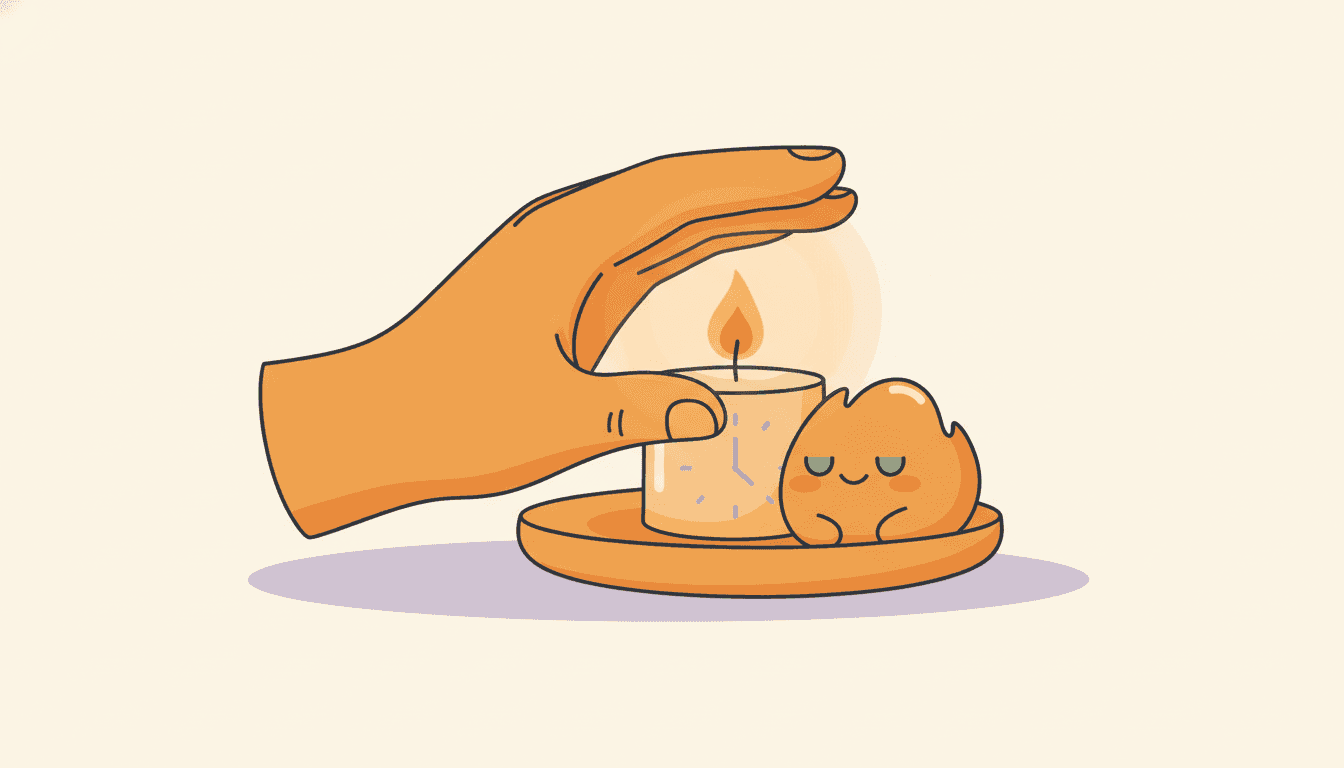
Masking — also called camouflaging or compensation — is the set of conscious and unconscious strategies people use to hide neurodevelopmental differences and appear to be coping the way everyone else appears to be coping. In ADHD it usually shows up as elaborate compensatory systems: over-preparation to cover working-memory gaps, perfectionism to pre-empt criticism, and long stretches of avoidance broken by crisis-driven bursts of productivity.
The defining feature is that it works. That is exactly what makes it so costly — masking succeeds at producing an acceptable external result while the internal effort required goes entirely unseen, including quite often by the person doing it.
Why This Hits Women Hardest
Women with ADHD are diagnosed later and less often than men, and masking is a substantial part of why. Girls with ADHD are more likely to present as inattentive rather than hyperactive — daydreaming rather than disruptive — and a quiet child who is struggling does not generate the referral that a disruptive one does. Meanwhile the social expectations placed on girls around organisation, emotional labour and being agreeable reward exactly the compensatory behaviours that hide the condition.
So the mask gets built early, and it gets very good, and it is reinforced constantly.
Then it meets a structural problem. Research on late-diagnosed women describes a consistent pattern: as external structure decreases through adulthood and executive demands increase, the compensations stop being sufficient. School provides timetables, terms and imposed deadlines. Adult life — particularly adult life with a career, a household, and often children — provides almost none of that, while asking for far more.
This is why so many women are diagnosed in their thirties and forties, and frequently after a period of collapse. The diagnosis does not usually follow a new symptom. It follows the moment the compensations finally ran out of headroom.
There is a second cost that the research is fairly blunt about. Delayed diagnosis affects how women see themselves — decades of low self-esteem, of measuring yourself against gendered expectations you keep not meeting, and of concluding that the difficulty is a defect of character because no other explanation was ever offered.
It is worth naming that this is not only a personal cost. Women who mask well are frequently the people others rely on most heavily — the ones who remember the birthdays, catch the errors, and hold the details nobody else is tracking. The competence is genuine. What goes unnoticed is its price, and the price is usually paid privately, in the evenings, alone.
What Masking Actually Looks Like
- Systems that require maintenance to work. Colour-coded calendars, multiple reminder apps, elaborate lists — all needing more executive function to sustain than they save.
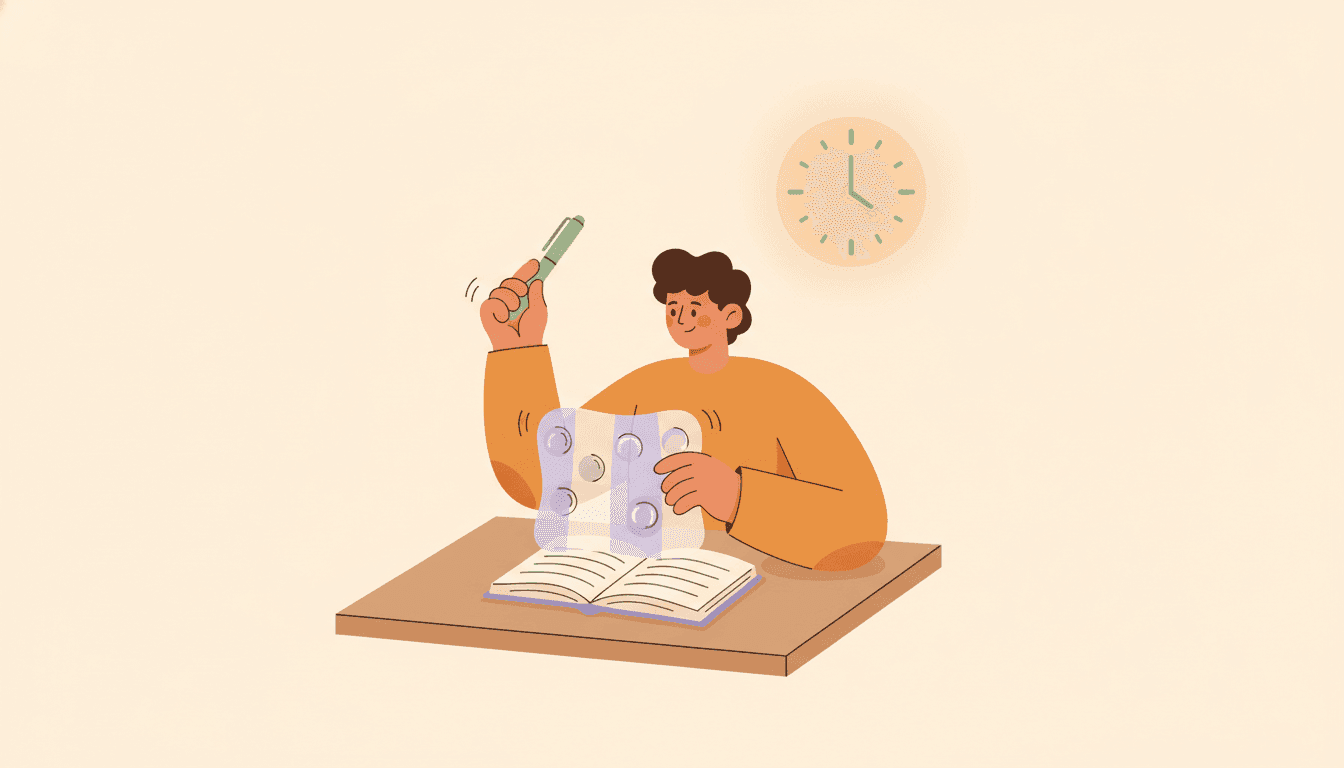
- Over-preparation for ordinary things. Rehearsing a phone call. Writing notes for a routine meeting. Reading the menu before you go.
- Perfectionism as pre-emptive defence. Not pride in the work — insurance against a criticism you are certain is coming.
- Crisis productivity. Weeks of paralysis, then an all-nighter that produces something genuinely good, then a crash. Repeated indefinitely.
- Enormous energy spent on appearing relaxed. The composure is the performance, and it is the most tiring part.
- You only unravel in private. The house may be chaos and the work impeccable, or the other way round, but never both at once.
- You cannot answer "what do you do to relax?" Because nothing is ever fully off.
Why the Mask Is So Hard to Put Down
The obvious advice — stop masking, be yourself — badly underestimates what is being asked. Masking is not a bad habit. It is usually the strategy that got you a career, relationships, and a life that functions, and it was built in response to real consequences rather than imagined ones.
It is also, more uncomfortably, still load-bearing. Many women who reduce masking discover that some of the reactions they were guarding against were accurate predictions. Workplaces are not uniformly safe places to disclose executive-function difficulty. The mask is not paranoia.
So the useful question is not how to remove it. It is where you can afford to set it down, and what can hold the weight instead — because the alternative to masking is not coping unaided. It is external scaffolding that does not run on your own depleted attention.
What Helps
Separate the systems that serve you from the ones that only hide you.
Go through your compensations and ask one question of each: does this reduce the load, or does it only reduce how visible the load is? A shared calendar reduces load. Rereading every email nine times only hides you, and it costs a great deal. This audit is uncomfortable and it is the highest-value thing on this list.
Replace effortful compensation with external structure.
The distinction that matters is whether a support runs on your attention or independently of it. A mental checklist runs on you. A recurring alarm does not. This is the whole argument for externalising as much as possible — and it is why an ambient hourly cue helps more than another app to check. TimeAware exists to mark the passage of time out loud so that keeping track of the day stops being one more thing your working memory is holding up.
Lower the standard deliberately, in one specific place.
Not everywhere at once — that is unsustainable and frightening. Pick one domain where the perfectionism is buying you nothing and let it be visibly imperfect. Send the email after one read. Serve the unimpressive dinner. The point is partly practical and partly evidential: you need direct experience that the predicted consequence does not arrive.
Recognise crisis productivity as a cost, not a method.
It is genuinely effective, which is why it is so hard to give up — the all-nighter does produce the work. But it runs on adrenaline, and adrenaline is borrowed rather than earned. If your working pattern is weeks of nothing followed by a heroic sprint, that is not a quirk of your process. It is a repayment schedule, and the interest shows up as burnout.
Find one place to be unmasked.
One relationship, one friend, one group where the systems are visible and nothing bad happens. Not universal disclosure — one place. Most of the exhaustion of masking is its continuousness, and a single genuine break in it does disproportionate good relative to how modest it sounds.
Grieve the earlier version of yourself, properly.
This is not a productivity strategy and it belongs here anyway. Nearly every woman diagnosed in adulthood goes through a period of anger about the years spent believing she was lazy, stupid or fundamentally deficient. That anger is proportionate. Skipping past it to focus on practical management tends not to work, and it is a legitimate reason to see a therapist — ideally one who understands adult ADHD.
Get properly assessed if you are still wondering.
If you are reading this and recognising yourself, that recognition is worth taking to a clinician rather than resolving alone. Masking is precisely what makes ADHD hard to see in women, including in assessment, so it is worth seeking someone who knows how it presents in adult women specifically. Self-recognition is a reasonable starting point and a poor stopping point.
A Kinder Frame
There is a particular grief in being told, at thirty-eight, that the thing you have been fighting for three decades had a name the whole time. It arrives alongside relief, and the two do not resolve into each other neatly.
But it is worth being clear about what the mask actually demonstrates. It is not evidence that you were fine and are now making excuses. Building and maintaining a set of compensations sophisticated enough to hide a neurodevelopmental condition from teachers, employers, partners and doctors for thirty years is not what coping looks like. It is what extraordinary, unrecognised, unsupported effort looks like.
Nobody applauded, because the entire point was that nobody could tell. That does not make the work smaller. It makes it lonelier.
The goal is not to dismantle the mask and stand there unprotected. It is to hand as much of its weight as possible to things that do not run on you — external structure, honest relationships, appropriate support — so that what remains is a choice you make in specific situations, rather than a performance you cannot stop giving.
Frequently asked questions
What does ADHD masking look like in adult women?
Most commonly: elaborate organisational systems that take more effort to maintain than they save, over-preparation for routine situations, perfectionism used as insurance against anticipated criticism, and cycles of avoidance broken by crisis-driven bursts of productivity. The unifying feature is that the external result looks fine while the internal effort required is invisible to everyone, often including the person doing it.
Why are women with ADHD diagnosed so much later than men?
Several factors compound. Girls more often present as inattentive rather than hyperactive, and a quiet struggling child rarely generates a referral. Social expectations around organisation and agreeableness reward exactly the compensations that hide the condition. And diagnostic criteria were largely developed from studies of hyperactive boys, so the presentation clinicians are trained to recognise is not the one many women have.
Why did my ADHD seem to get worse in my thirties?
Usually the underlying differences have not changed — what changed is the ratio between demand and support. Education supplies timetables, terms and imposed deadlines for free. Adult life removes that structure while adding a career, a household and often children. The compensations that were sufficient at twenty are being asked to cover far more at thirty-five with far less scaffolding underneath.
Is masking the same in ADHD as in autism?
The concept is shared and there is real overlap, but the emphasis differs. Autistic masking is often described as suppressing natural responses and imitating social behaviour. ADHD masking tends to centre on hiding executive-function difficulty — concealing disorganisation, forgetfulness and time management problems behind compensatory systems. Many people experience both.
Should I stop masking?
Not wholesale, and not immediately. Masking is usually load-bearing, and some of the consequences it protects against are real rather than imagined — not every workplace is a safe place to disclose. A more workable approach is auditing which compensations reduce your actual load versus which only reduce visibility, and finding specific contexts where the mask can come down safely.
Can masking cause burnout?
It is one of the most commonly described routes into it. The effort of continuous compensation is sustained and largely unrecognised, which means it rarely gets rest built around it, and crisis-driven productivity adds a boom-and-bust pattern on top. Sustained high performance maintained through masking is a well-recognised path to emotional exhaustion, particularly for women diagnosed later in life.
How do I get assessed as an adult woman?
Start with your GP or primary care physician and ask for a referral to an adult ADHD assessment, ideally with someone experienced in how it presents in adult women. It helps to bring concrete examples across your whole life rather than a symptom list, and to be explicit about the compensations you use — because masking is exactly what makes the condition hard to see, including during assessment.