ADHD Burnout: Why High-Functioning Adults Crash (and How to Recover Without Quitting Everything)
You were holding it together. Then one morning you could not get out of bed for the meeting you usually love. The inbox you had been on top of started looking like a foreign language. You quietly cancelled three things, then four, then a whole weekend. The exhaustion did not lift when you slept. The shame did not lift when you rested. Everyone around you keeps asking if you are okay and the honest answer is "I do not know what is wrong with me but I cannot do this anymore." This has a name, and you are not failing — you are in burnout.
What Is ADHD Burnout?
ADHD burnout is the collapse that follows a long stretch of over-compensating: masking symptoms, white-knuckling executive function and working twice as hard to look half as competent. It typically shows up as a sudden failure of coping strategies that used to work, cognitive fog that rest does not clear, and emotional flatness.
It is not laziness, not weakness, and not quite the same as ordinary burnout. Research suggests adults with ADHD report noticeably higher job burnout than colleagues without ADHD, and the experience often comes with an unsettling sense that the systems that have always carried you have simply stopped working.
For many adults, especially women diagnosed late, burnout is the thing that finally brought them to a diagnostician. The strategies they had been quietly using to survive their own brain ran out of fuel, and what was left looked enough like depression that someone finally took a closer look.
The Neuroscience: Why ADHD Brains Burn Out
The mechanism is over-compensation. ADHD brains have a documented gap between what they can do effortlessly and what their environment demands of them. To close that gap they recruit extra effort: extra planning, extra checking, extra mental rehearsal, extra time hidden from view to do what neurotypical peers do automatically. Each of those acts is small. Together they form a chronic cognitive load that runs in the background every single day, for years.
A 2024 field study of 171 employees by Yaara Turjeman-Levi, Guy Itzchakov and Batya Engel-Yeger, published in AIMS Public Health, found that employees with ADHD reported higher job burnout than those without, and that executive function deficits mediated the relationship, especially difficulties managing time and organising work. In other words, much of the burnout came not from the ADHD itself but from the cumulative cost of compensating for executive function gaps in environments that did not account for them. The bill arrives as exhaustion, and eventually as lost capacity.
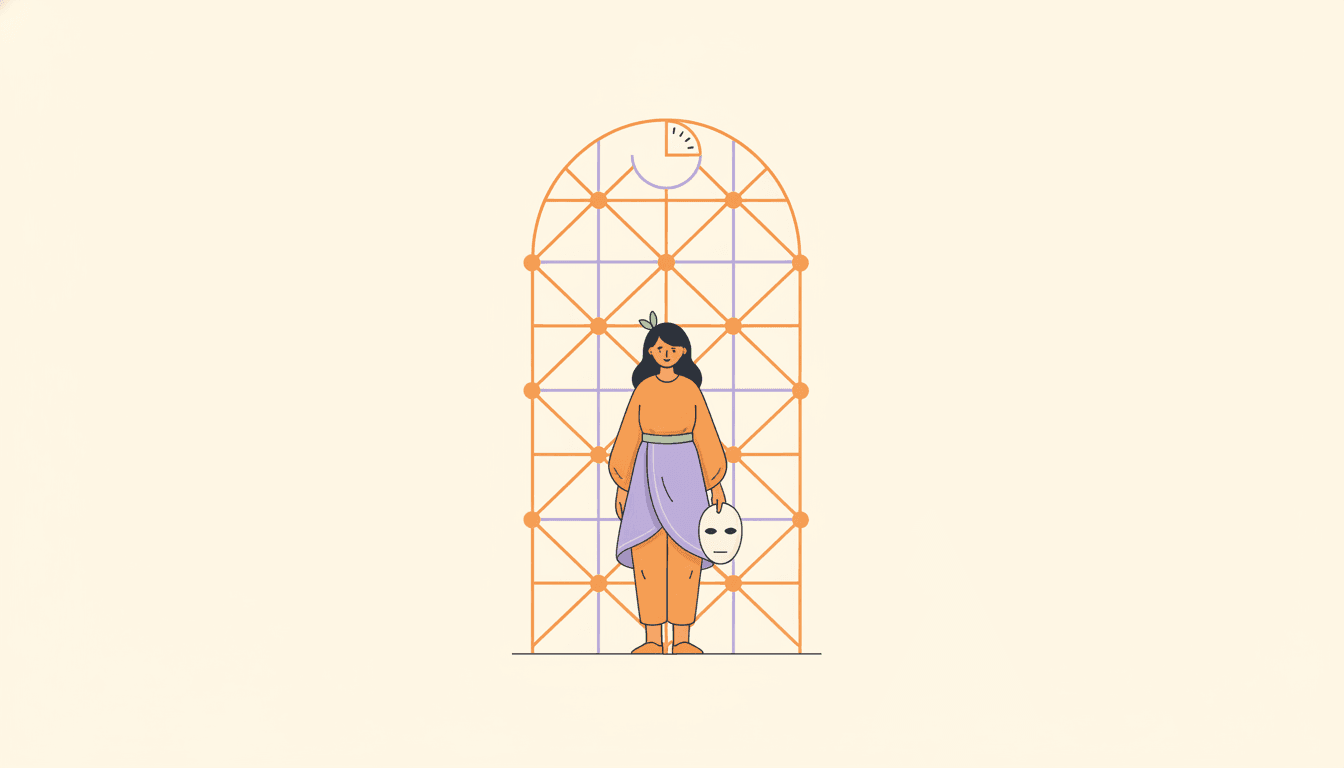
There is a second engine: masking. Many ADHD adults, especially women diagnosed late, spend significant energy actively suppressing the visible markers of ADHD. Fidgets are stilled, interrupting is throttled, lost trains of thought are quietly recovered, the panic of forgotten obligations is hidden behind a smile. The performance is exhausting in a way that never registers as work, because the work has no name and no clock-out time. The brain runs hot all day and never gets to sit down.
ADHD Burnout vs. Depression
This is the distinction that matters for treatment, and it is the one most often missed. They overlap heavily (both involve exhaustion, low mood, withdrawal and a sense of hopelessness), and they can absolutely coexist. But they respond to different things.
ADHD burnout typically improves when external demands really drop. A real week off, not a week with the laptop within reach, usually moves the needle measurably. Depression, by contrast, often persists even when life slows down; the joy and the energy do not return just because the calendar cleared.
ADHD burnout also tends to be specific in shape: it is the executive functions that collapse first — planning, initiating, switching — while emotional capacity may stay intact longer. Depression flattens emotional capacity early. If you can still feel deep care for the people in your life but cannot for the life of you organise a simple errand, you are more likely in burnout than depression. If you cannot feel the care either, both may be in play and a clinician should be involved.
Common Signs You Might Recognize
- The collapse of your strategies. The systems you have used for years — calendars, alarms, lists, rituals — suddenly do not work, and you cannot say why.
- Cognitive fog that does not respond to coffee. The kind of slowness where reading a paragraph feels like wading through it.
- A short, brittle temper at small things. Snapping at the dishwasher, the inbox, your partner — not because you have changed, but because there is no slack left anywhere.
- Selective shutdown. Hard tasks that used to be hard become impossible. Easy tasks that used to be easy become hard.
- Body symptoms. Sleep that does not refresh. Frequent headaches. Stomach issues the doctor cannot explain. Constant low-grade illness.
- The quiet "I cannot do this anymore" thought. Not dramatic, just steady, repeated, and increasingly true.
- Shame about how little you are doing, even though by any reasonable measure you are doing too much.
Why It Hits Late-Diagnosed Women Hardest
Women with ADHD are diagnosed later, on average, than men, often well into their thirties or forties, after a lifetime of unrecognised compensation. By the time the diagnosis arrives, the masking is so well-practiced it is invisible even to the person doing it. You do not feel like you are masking; you feel like you are just being a functional adult, which is the point and also the problem.
On top of that, the cognitive load of adult female life is unevenly heavy. The invisible work of households, relationships, careers, and emotional labour falls disproportionately on women, and almost none of it shows up on a calendar. An ADHD woman is masking for the world, compensating for her brain, and quietly running a project-management system for her household — three full jobs sharing the cognitive footprint of one.
Burnout, when it finally hits, often looks from the outside like "she got lazy" or "she is having a midlife crisis." It is neither. It is decades of unpaid cognitive overtime coming due, all at once.
How to Recover (Without Quitting Everything)
Name it as burnout, not personal failure.
This sounds soft but it is the most load-bearing intervention. As long as you are telling yourself the problem is you, you will keep trying to push through, which is the exact thing causing the burnout. Naming it (saying out loud or in writing, "I am in ADHD burnout, my brain is depleted, and the strategy is to reduce load") moves you from grinding harder to actually recovering. Recovery cannot start until the diagnosis lands.
Cut commitments before you crash, not after.
Most ADHD burnout has a runway. The early signal is "everything feels harder than it should". That is the moment to cancel the optional thing, not the moment to push through and burn the next two weeks. Treat the early signal like a fuel light on a car, not a moral test. The cost of cancelling one event is hours; the cost of pushing through is months.
Reduce masking deliberately.
You cannot stop masking everywhere, because some environments do require it. You can pick one or two relationships or settings where you let the mask down: leave the fidget visible, let the words come out unsorted, admit when you forgot, ask for the deadline in writing instead of pretending you remembered. Each unmasked hour is fuel your brain is not paying out.
Anchor your day to an external clock you do not have to check.
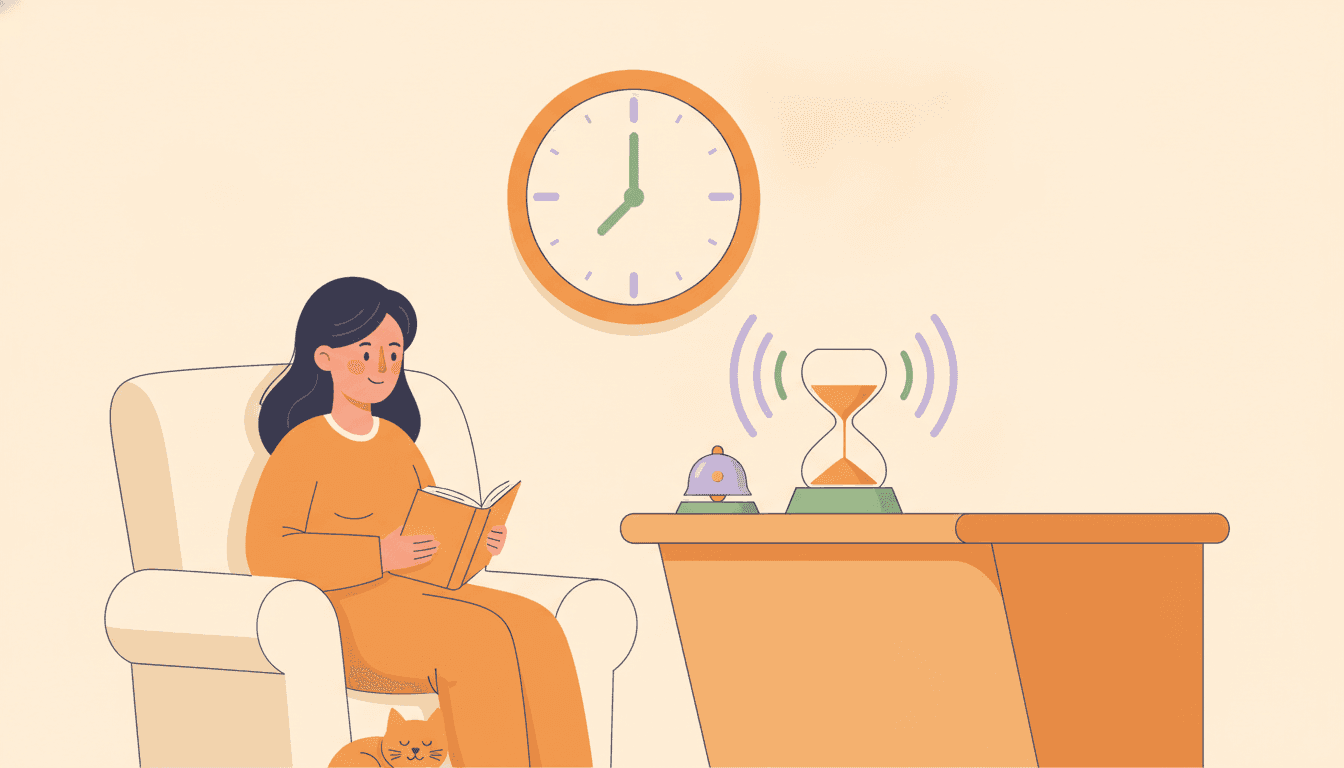
One of the most expensive parts of burnout is that the day still has to be navigated, and a depleted brain is the worst possible tool for tracking time. A steady hourly cue — a calm voice or chime that announces the hour, on the hour, every hour — gives your day a felt shape so you do not have to spend the little capacity you have left re-orienting yourself. This is the principle behind TimeAware: when the day has its own rhythm coming from outside, your brain does not have to manufacture one from inside.
Rebuild capacity in tiny increments.
A common mistake is to crash, take two weeks off, feel a little better, and immediately try to be your pre-burnout self. The brain rebuilds capacity slowly, closer to physical-injury rehab than to a flu recovery. Add one small commitment at a time, hold it for two weeks, see if it sticks before adding the next. Push too hard and you will be back at zero faster than you came up the first time.
Get a clinician involved if it is not lifting.
If reduced load is not moving the needle after a few weeks, or if your emotional capacity has gone flat alongside the executive collapse, talk to a clinician who knows ADHD. Burnout and depression overlap, often coexist, and respond to different things. There is no medal for figuring it out alone, and the wrong self-diagnosis costs months.
You Were Strong for Too Long
ADHD burnout is not a personal failing dressed up in clinical-sounding language. It is the predictable consequence of running an executive system harder than it was built to run, in environments that gave you no credit for the effort. The recovery is real, and the cost of pushing through is steep.
You did not get burnt out because you are weak. You got burnt out because you were strong for too long.
If burnout is showing up most as not being able to start anything — even things you used to love — our piece on task paralysis covers the freeze response on its own. And if it is showing up as staying up too late because the day did not contain you, revenge bedtime procrastination explains the late-night part of the same cycle.
Frequently asked questions
Is ADHD burnout a formal diagnosis?
No, it is not in the DSM as a separate condition. Burnout itself is recognised by the WHO as an occupational phenomenon, and "ADHD burnout" is a descriptive term clinicians and the community use for the specific pattern of collapse that follows long-term over-compensation in ADHD adults. It is not formal yet, but it is real, well-described, and increasingly studied.
How long does ADHD burnout last?
Recovery timelines vary widely — from a few weeks for milder cases caught early to many months for full collapses. The biggest predictors are how soon you reduce load, whether the underlying environment actually changes, and whether you treat any coexisting depression. A common mistake is treating burnout like a flu (rest a week, return at 100%) when it is closer to rehab (rebuild slowly, hold the gains).
How is ADHD burnout different from autistic burnout?
They share root causes — chronic masking, executive load, environments that demand neurotypical performance — and many people with both ADHD and autism (AuDHD) experience them simultaneously. Autistic burnout often involves more sensory shutdown and loss of skills that recover with deep rest; ADHD burnout tends to show as collapse of executive strategy and motivation. The treatment overlap is large; the precise shape differs.
Will medication fix this?
Medication can help by reducing the cognitive load of compensating — which is the underlying driver — but it will not, on its own, pull you out of established burnout. The most reliable recovery combines medication (if you use it), a real reduction in load, and explicit reduction in masking. Doubling your medication to push through usually accelerates the crash.
I'm in burnout but cannot afford to cut commitments. What do I do?
This is the hardest version. Start with the smallest reductions you have control over — one social commitment, one optional work task, one volunteer obligation, one unpaid invisible-labour role at home. Even a small reduction starts the recovery. Talk to a clinician about whether short-term medical leave is appropriate; in many countries ADHD-related burnout is covered under existing disability or sick-leave protections.
Why do I feel so much shame about burnout?
Because most of the work that got you here was invisible — the masking, the compensating, the cognitive overtime — and the collapse is highly visible. From the outside it looks like you just stopped trying, when in fact you have been trying twice as hard as anyone could see. The shame is misdirected; it belongs to the system that did not account for the load, not to the person carrying it.
Can I prevent ADHD burnout from happening again?
Not by trying harder. You can reduce the odds by building structural protections — a calendar that does not let you over-book, regular unmasked hours, an external time anchor that catches drift early, an honest read of your daily capacity, and at least one person who knows how to spot your early warning signs before you do. The goal is to make collapse impossible by design, not by willpower.
This article is for education, not medical advice. For diagnosis or treatment, talk to a qualified clinician. How we research our articles