ADHD Hyperfocus: How to Stop Losing Hours Without Killing Your Flow
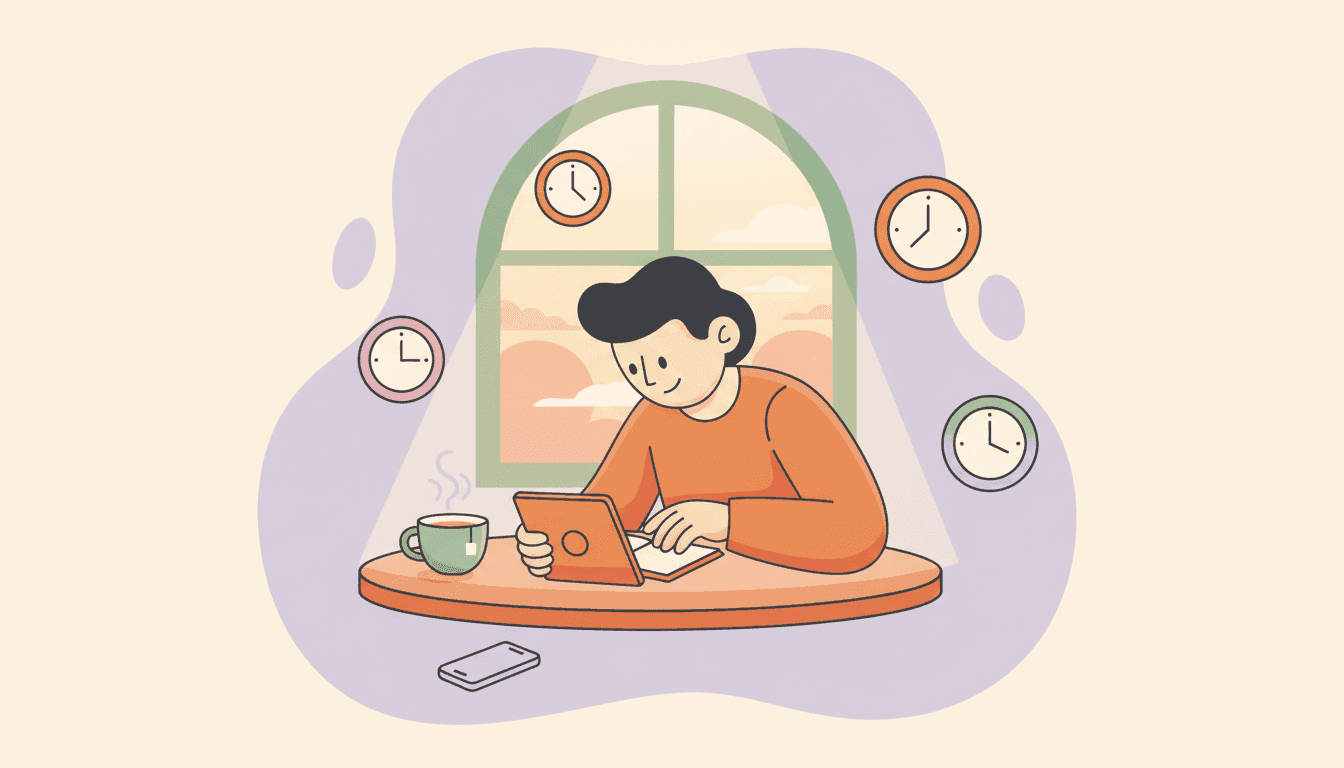
You sat down at 9 AM to fix a small bug. The next time you look up, the sun is in the wrong place, you have not eaten lunch, your phone is full of missed messages from a friend you were supposed to meet, and somehow you have written six hundred lines of code on something completely unrelated. The work was good. The fallout is bad. Welcome to ADHD hyperfocus — the trait people online keep calling a superpower and that ruins more days than it saves.
What Is ADHD Hyperfocus?
Hyperfocus is a state of intense, narrowly directed attention in which you become so absorbed in one activity that you lose track of time, surroundings and basic needs. It is strongly associated with ADHD, and it tends to switch on when an activity is novel, interesting, urgent or challenging.
It can happen in other conditions, and to a lesser degree in neurotypical brains, but the link with ADHD shows up clearly in research. In a study of more than 600 adults, researchers Hupfeld, Abagis and Shah found that people with more ADHD symptoms reported hyperfocus more often, at school, in hobbies and during screen time. A 2019 review by Brandon Ashinoff and Ahmad Abu-Akel reached the same conclusion, while pointing out how little laboratory research on hyperfocus exists so far.
Importantly, hyperfocus is not the same as being focused. Voluntary, regulated focus is what most people mean when they say someone is concentrating. Hyperfocus is involuntary and largely unregulated — you do not choose it, and you cannot easily exit it. It feels like the activity has captured you, not the other way around.
The Dopamine Story: Why Your Brain Locks In
ADHD involves differences in the brain's dopamine reward signalling. Dopamine is the chemical messenger that signals reward and helps the prefrontal cortex sustain attention. For most tasks, the dopamine signal is too weak to hold an ADHD brain in place, which is why ordinary focus is so hard. But when an activity finally produces enough dopamine to register, the brain over-corrects: it grabs on and refuses to let go.
From the inside, this feels like flow. From the outside, it can look concerning. Hours pass without check-ins, meals, or transitions. People often describe it as the brain finally finding the right key, and refusing to put the key down. The problem is that the rest of your day still needs you.
Dr. Edward Hallowell, who has written extensively on adult ADHD, describes hyperfocus as the engine of much of the creative and entrepreneurial work ADHD adults are known for. The same neurology that makes ordinary focus painful makes deep absorption uniquely accessible. The work is to keep hyperfocus on a leash, not to suppress it.
When Hyperfocus Becomes a Problem
Hyperfocus is harmless when it lands on something useful at a time you can afford to lose. It becomes a problem when it lands on the wrong thing, the wrong moment, or both. Common patterns include:
- The wrong target. Hyperfocusing on email or a Reddit thread when you sat down to do deep work, then losing your real work block.
- Past bedtime. Hyperfocusing on a creative project late into the night, sabotaging the next day's executive function. It is a close cousin of revenge bedtime procrastination, where the late hours feel like the only ones that belong to you.
- Relationship novelty. Hyperfocusing on a partner's interests during the start of a relationship and then dropping the topic entirely six months later, which is confusing and painful for both people.
- Screens that never run out. Feeds, games and video platforms supply fresh novelty on demand, which is exactly what hyperfocus feeds on. Screen time was one of the three settings where Hupfeld and colleagues found more frequent hyperfocus among adults with more ADHD symptoms, alongside school and hobbies.
- Missed body cues. Skipping meals, water, medication doses, and bathroom breaks. Many ADHD adults discover only in their thirties that the headache they get every afternoon is dehydration.
- Forgotten commitments. Picking up children, joining a meeting, calling a parent — the hyperfocus state can override time perception. This is closely related to time blindness; if you have not read our deep dive on time blindness, it is the missing context for everything in this article.
How to Stop Losing Hours: 7 Practical Strategies
Set multiple alarms, never just one.
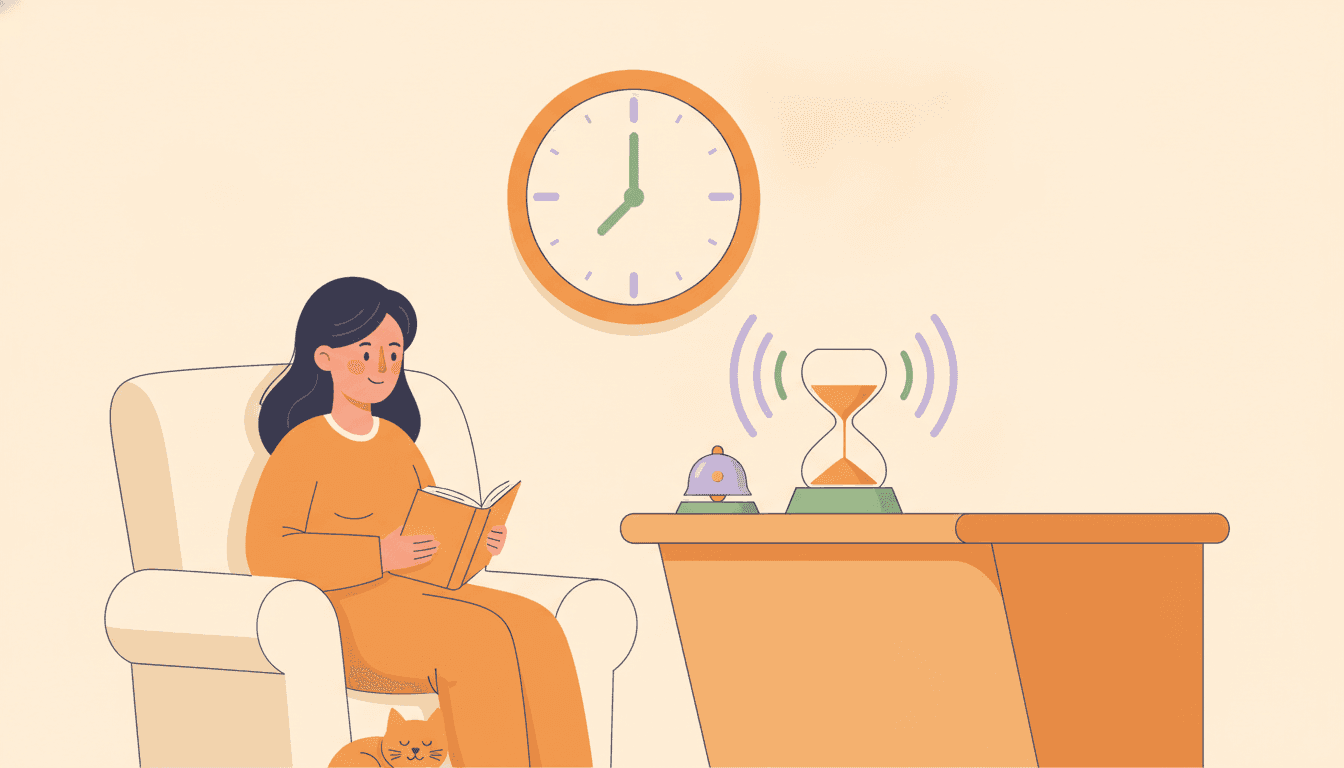
ADHD adults will reliably dismiss a single alarm, often without remembering they dismissed it. Stack them. Set a soft alarm fifteen minutes before you need to transition, a firmer one at the actual time, and a final one five minutes after. The point is to make the transition unmissable across whatever state your attention is in, without resorting to a hammer.
Use a steady external rhythm, not just one-off alarms.
Single alarms work for known transitions, like school pickup at 3. They fail for the more common case: you do not know in advance what you will hyperfocus on or when you will start. A steady hourly cue — a gentle voice or chime that simply says the time on the hour — gives your brain a heartbeat that hyperfocus cannot fully override. This is the design principle behind TimeAware: not aggressive interruption, but a predictable rhythm that keeps you tethered to the day.
Pre-commit to a stopping rule.
Before you start a hyperfocus-prone activity, decide and write down what will end it. The timer goes off. This chapter is done. The sun goes down. Stopping rules made during the calm pre-flow state are far more enforceable than decisions you try to make mid-flow, when your brain is chemically incentivized to keep going.
Pair hyperfocus with body cues.
Drink a large glass of water before you start. When you have to use the bathroom, you will be forced out of focus, often before damage is done. Set a snack within reach. These are crude levers, but they work because the body's alarm system is harder to override than the mind's.
Schedule it on purpose.
Rather than letting hyperfocus capture you at random, deliberately schedule windows for it. A four-hour deep work block once a week, with explicit permission to lose track of time, is far less disruptive than a four-hour hyperfocus session that ate the afternoon you needed for everything else. You are letting the trait have its space rather than fighting it everywhere.
Track your patterns.
Many adults can identify their personal hyperfocus triggers within a few weeks of casual logging. Common patterns: late-evening hyperfocus when you are avoiding sleep, video-game hyperfocus when work has been emotionally hard, novelty-driven hyperfocus when starting a new project (and the corresponding crash when novelty wears off). Knowing your triggers turns the trait from random ambush into something you can plan around.
Build a soft re-entry routine.
Coming out of a long hyperfocus session is disorienting: the brain has been deeply tuned to one stimulus and the rest of the world feels chaotic. Without a re-entry ritual, many people respond by avoiding the comedown entirely (which often means more hyperfocus). A simple sequence — drink water, stand up, write a single sentence about what you did, look at the day's remaining priorities — buffers the transition and reduces the urge to dive back in. Leaving hyperfocus is one of the hardest transitions an ADHD brain makes, so it deserves a plan of its own.
Working With Hyperfocus, Not Against It
When the right key fits, no one focuses harder.
The goal is not to eliminate hyperfocus. The same neurology that costs you an afternoon also produces the long, deep, original work that is harder for neurotypical brains. Many people with ADHD find their way into entrepreneurship, creative fields and fast-moving professions for a reason: when the right key fits, no one focuses harder.
What you need is a frame around the trait. The frame is built out of external rhythm, pre-committed exits, body-based interrupts, and self-knowledge about your triggers. Hyperfocus inside that frame is a strength. Hyperfocus without it is just an expensive habit.
A Note on Task Paralysis
Hyperfocus and task paralysis are flip sides of the same dopamine economy, and the helpful kind of ADHD fidgeting sits between them — the same hand that clicks a pen for ten quiet minutes will quietly hand the day to a feed if the fidget hijacks the focus it was meant to support. The same brain that cannot start a boring spreadsheet can vanish for nine hours into an interesting one. If you find yourself swinging between the two extremes, the underlying issue is rarely willpower. More often, your brain has a narrow window of activities that hit the reward threshold, and it falls off the cliff in either direction. Strategies that build external rhythm and stable scaffolding tend to help with both.
Hyperfocus does not have to be a thief. With a steady external rhythm and a few honest stopping rules, it can be the most useful thing about how your brain works, without costing you the rest of your life.
Frequently asked questions
Is ADHD hyperfocus a real diagnostic feature?
Hyperfocus is not a formal diagnostic criterion in the DSM, but it is widely recognized in the clinical literature on ADHD and frequently reported by patients. Research, including a study of more than 600 adults, has found that people with more ADHD symptoms report hyperfocus more often, and many clinicians consider it a hallmark trait even though it does not appear in the official symptom list.
Why can I hyperfocus on hobbies but not on work I care about?
Hyperfocus is driven by the brain's reward response, not by your conscious sense of priorities. Activities that produce strong, immediate dopamine signals — novelty, fast feedback, clear progress, low risk of judgment — are far more likely to trigger hyperfocus than important work that pays out slowly. This is why you can build an entire app over a weekend but cannot start the work assignment you have had for two weeks.
Can I train myself to hyperfocus on demand?
Not reliably. Hyperfocus is involuntary by nature — the brain has to be triggered by an activity that meets its reward criteria. You can, however, increase the odds: choosing more interesting framings of boring tasks, using external structure such as timers, body doubling, and environmental cues, and protecting the conditions where hyperfocus tends to land naturally.
Is it bad to hyperfocus?
Hyperfocus itself is neither good nor bad — context determines whether it is useful or destructive. A four-hour deep-work session you scheduled and recovered from gracefully is a strength. A four-hour session that cost you sleep, a meal, and a relationship commitment is a problem. The goal is to keep the state, but to put a frame around when and how you let it run.
How do I get out of hyperfocus once I am in it?
Mid-flow exits are hard because the brain is being chemically rewarded for staying. The most reliable interrupts are physical — a forced bathroom break, a person walking into the room, a multi-stage alarm sequence you cannot dismiss. Decisions about exits are far more enforceable when made in advance, before the focus state begins.
Does hyperfocus get better with age or treatment?
ADHD itself often shifts with age — many adults find that pure hyperactivity calms while inattentive symptoms remain. Hyperfocus typically persists, but many people develop better scaffolding for it over time. Medication, ADHD coaching, and therapy adapted for ADHD can all reduce the frequency of disruptive hyperfocus episodes by raising baseline executive function rather than by suppressing focus.
This article is for education, not medical advice. For diagnosis or treatment, talk to a qualified clinician. How we research our articles