ADHD Task Paralysis: Why You Freeze Before You Start (and How to Get Unstuck)
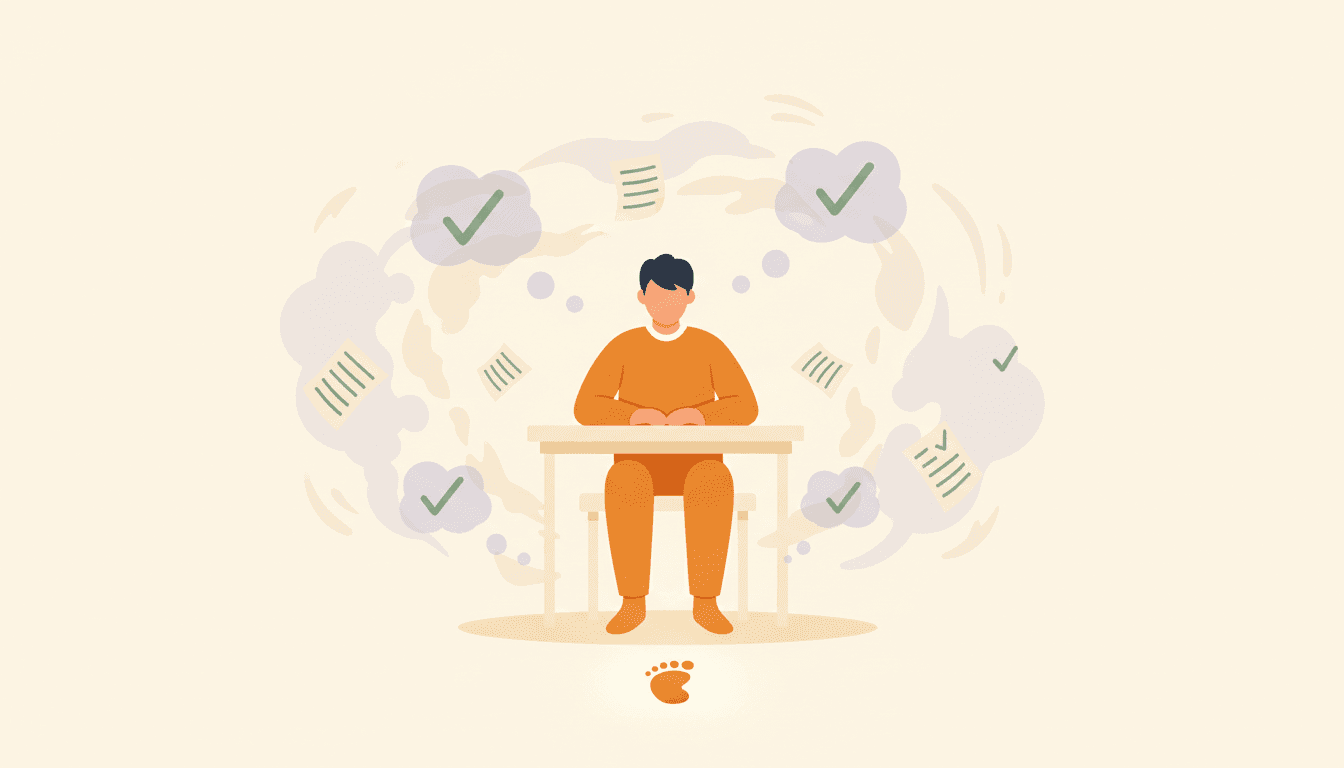
Your laptop is open. The document is loaded. You know exactly what the first sentence should say. Two hours later you are still staring at the cursor — not scrolling social media, not even particularly distracted, just frozen. The task feels both completely doable and completely impossible at the same time. If this is a familiar loop, you are not lazy or undisciplined. You are experiencing ADHD task paralysis, often called ADHD paralysis, and there is real neuroscience behind why it happens.
What Is ADHD Paralysis (Task Paralysis)?
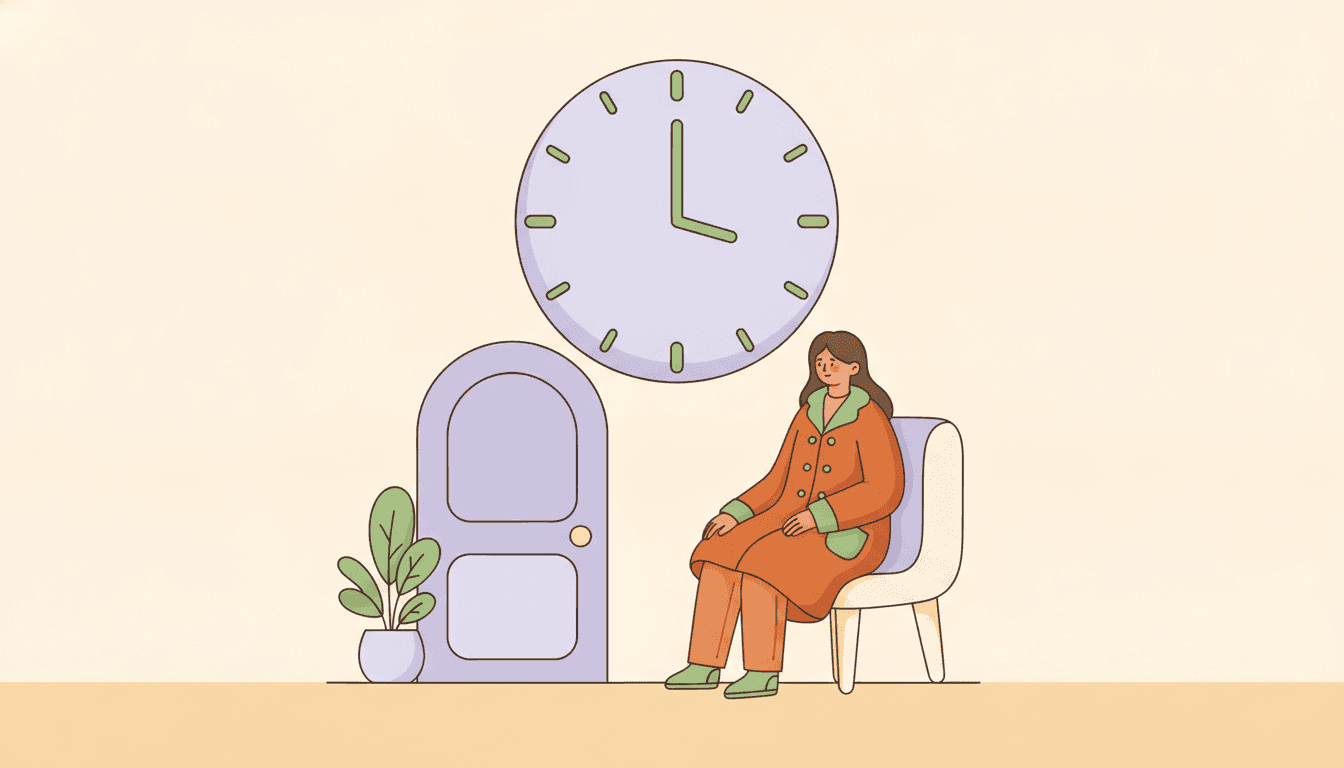
ADHD paralysis, or task paralysis, is being unable to start a task even when you know what to do, want to do it and have time available. It is a failure of task initiation, one of the executive functions ADHD affects, and it differs from procrastination, which usually means choosing something more pleasant instead.
With paralysis, your brain does not even let you switch into avoidance mode. You are stuck in a kind of cognitive freeze. The ADHD organisation ADDA describes ADHD paralysis as freezing when information, emotions or your surroundings become overwhelming, and notes that while it is not a formal diagnosis, it is a very real experience for many adults.
Dr. Russell Barkley, one of the most cited researchers in the ADHD field, frames this as a disorder of self-regulation rather than attention. The bottleneck sits on the bridge between intention and action, not in noticing what needs to be done. That bridge is built from working memory, time perception, emotional regulation, and motivation, and in ADHD brains every one of those supports is shorter than it needs to be.
Task Paralysis vs. Procrastination: Not the Same Thing
People often use the words interchangeably, but they describe different states. Procrastination is an active choice: you avoid the boring task by doing something more rewarding. Task paralysis is the absence of choice: you cannot make any task happen, including the avoidance task. You may end up sitting in silence, unable to start work and unable to enjoy a break either.
The practical difference matters. Strategies aimed at procrastinators — willpower, blocking distracting websites, productivity guilt — often make paralysis worse, because the problem is not desire. The problem is initiation.
The Neuroscience: Why Starting Is the Hardest Part
Task initiation is largely governed by the prefrontal cortex working in concert with the brain's reward system. In ADHD, differences in dopamine signalling make that system less dependable. Dopamine is what tells your brain a task is worth the effort and gives it the activation energy to begin. When that signal is weak, even tasks you logically value can feel inert, and your brain cannot generate the spark.
There is also an emotional layer. Clinicians often describe an avoidance loop: the longer a task sits undone, the more emotionally loaded it becomes, which further dampens the prefrontal cortex's ability to engage with it. By the time you have been staring at the same email for two days, the email is no longer just an email. It is a small monument to your shame about not having sent it. That emotional weight is itself a paralyzing force.
If unreliable time perception is part of why your tasks balloon into shapeless emergencies, our companion piece on time blindness covers the neuroscience underneath both patterns. And if the task itself keeps vanishing from your mind the moment you close the tab, that is the object-permanence shortfall that makes paralysis even harder to break.
Common Triggers You May Recognize
Task paralysis is rarely random. It tends to flare in predictable conditions:
- Tasks with too many micro-decisions baked in. "Plan the trip" is paralysis fuel because it contains thirty unspoken sub-tasks. "Open the airline website" is not. The same thing happens to ADHD mornings, which are forty small decisions in a row before you have even left the house.
- Tasks with no clear ending. Open-ended creative work or "tidy the room" are notorious — your brain cannot picture the finish line, so it refuses to start the journey.
- High-stakes tasks. The more an outcome matters, the more activation energy is required, and the more easily perfectionism takes over and shuts initiation down.
- After a major emotional load. Conflict, overstimulation, or even good excitement can leave the executive function system exhausted. Many ADHD adults describe being unable to start anything for hours after social events, even ones they enjoyed.
- Decision-fatigued afternoons. Late-day paralysis is often blamed on laziness when it is actually the entirely normal depletion of a cognitive system that started the day already running short.
7 Strategies That Actually Work
Make the first step embarrassingly small.
If "write the report" is paralyzing, the first task on your list is not "write the report." It is "open the document." That is it. Coaches often call this the smallest next action, and the trick is to choose something so trivial that your brain cannot mount a defense against it. Once you are in motion, momentum often does the rest of the work for you.
Use external time anchors instead of internal will.
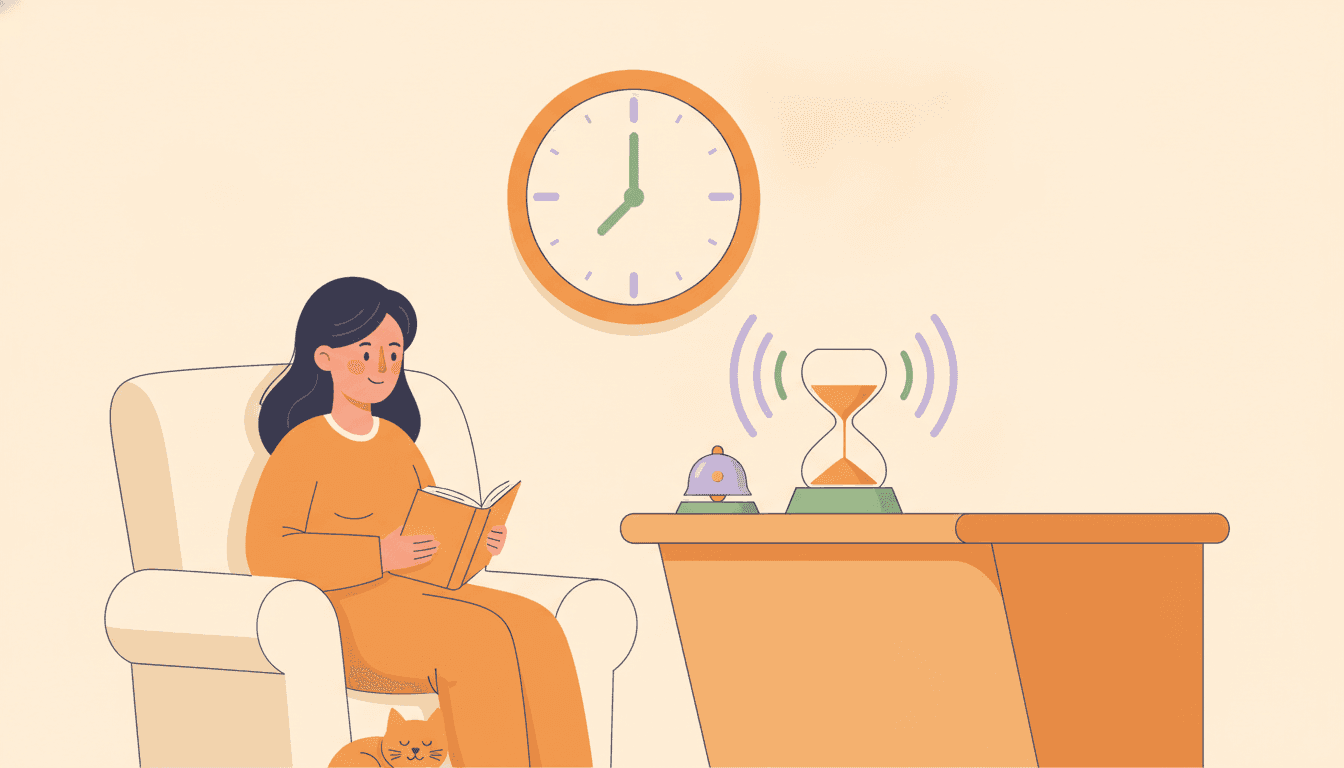
Most ADHD productivity advice assumes your brain can summon a sense of "now I should start." If that internal cue is unreliable — and for ADHD brains it usually is — you need to outsource it. Hourly chimes, gentle scheduled audio cues, alarm-based start signals: these all bypass the part of your brain that is failing and replace it with an external nudge. This is the design principle behind TimeAware: a calm voice that says the time on the hour, every hour, so you have a predictable external rhythm rather than an unreliable internal one.
Body double.
Working alongside another person, even silently, even on a video call, is one of the most widely recommended ADHD tools, although formal research on it is still thin. Another person's presence seems to lend you some of the starting energy your brain is not supplying. Our guide to ADHD body doubling covers how to set it up so it works reliably. Co-working apps, focus rooms, or just a friend on a silent call all count.
Move first, plan second.
Brief physical movement — twenty seconds of jumping jacks, a walk down the hall, a few stretches — is thought to boost dopamine and norepinephrine and can prime the brain for activation. This is unintuitive (the task you are trying to start is mental, so why move physically?), but many people find that a little motion before initiation helps.
Write it out before you do it.
If your working memory is overloaded by the implicit decisions in a task, dump them onto paper. List every micro-step explicitly. The act of externalizing the structure removes the cognitive load that was holding you frozen. You are not making a to-do list — you are doing the executive function work that your brain was about to fail at, on paper, where it cannot get lost.
Lower the stakes deliberately.
Tell yourself you are going to do a deliberately bad version. The first draft can be terrible. The kitchen can be partially cleaned. Letting yourself produce something below your standard is often the only way to bypass perfectionism. Once you have a bad version, editing it is no longer a paralysis-class task.
Notice the emotional weight, name it, and proceed anyway.
Paralysis often has a feeling underneath it: dread, shame, fear of judgment, fear of finishing. Naming the feeling out loud — "I am avoiding this because I am afraid I will do it wrong" — reduces its grip. You do not have to fix the feeling to act. You just have to stop pretending it is not there.
When to Seek Professional Support
Task paralysis is a normal part of living with ADHD, but if it is interfering significantly with work, school, or relationships, it is worth talking to a clinician. Treatment options have expanded considerably — medication where appropriate, CBT specifically adapted for ADHD, ADHD coaching, and occupational therapy can all reduce the frequency and severity of paralysis episodes. There is no virtue in trying to white-knuckle a neurological pattern.
Letting Go of the Shame Around Starting
Building your own scaffolding is not cheating. It is doing the job your prefrontal cortex needs help to do.
The shame cycle around task paralysis is often more disabling than the paralysis itself. You freeze, you feel terrible about freezing, you avoid the task longer because of how bad you feel, the task gets bigger, the shame gets bigger. Breaking that cycle starts with accepting that initiation really is harder for your brain. Needing scaffolding is not a character defect. Many ADHD adults who function well in demanding jobs are quietly using half a dozen external supports the rest of the world does not see: calendars, alarms, body doubles, environmental cues.
If you are stuck right now, the first action does not need to be impressive. Open the tab. Set the timer. Tell a friend you are starting. The bar for breaking paralysis is low on purpose — your job is not to be productive, it is to be in motion.
Frequently asked questions
What is the difference between ADHD task paralysis and procrastination?
Procrastination is an active choice to do something more enjoyable instead of the task you should be doing. Task paralysis is the inability to start any task at all — including the avoidant one. People in paralysis are often unable to enjoy a break, scroll their phone, or do an alternative task; they are simply stuck.
Is ADHD task paralysis the same as executive dysfunction?
Task paralysis is one symptom of executive dysfunction, not the whole thing. Executive dysfunction is a broader category that also includes problems with planning, working memory, time management, and emotional regulation. Paralysis specifically refers to the failure of task initiation.
How long does ADHD task paralysis usually last?
Episodes can last anywhere from a few minutes to several hours, and in severe cases days. The duration depends on the size of the task, the level of perceived stakes, current emotional state, and whether external scaffolding (deadlines, body doubles, time cues) is in place. Many people find that episodes become shorter and less frequent once the strategies above turn into habits.
Can medication help with task paralysis?
ADHD medication can substantially reduce the frequency of paralysis episodes for many people because it supports the dopamine signalling involved in task initiation. It is not a cure, and many people still benefit from behavioral strategies on top of medication. A clinician can help determine whether medication is appropriate for you.
What should I do in the moment when I am frozen?
Pick the smallest possible next physical action — open the document, stand up, drink water — and do only that. Do not commit to finishing the task. The goal is to break the freeze, not to complete the work. Once you are in motion, decide whether to keep going. Most of the time, you will.
Why does task paralysis feel worse in the afternoon?
Executive function relies on a finite cognitive budget that depletes over the day. By afternoon, especially after meetings or decisions, the prefrontal cortex has less capacity available for task initiation. Scheduling demanding tasks earlier in the day when possible, and adding external time anchors in the afternoon, both help.
This article is for education, not medical advice. For diagnosis or treatment, talk to a qualified clinician. How we research our articles