ADHD Waiting Mode: Why One Appointment Can Eat Your Whole Day
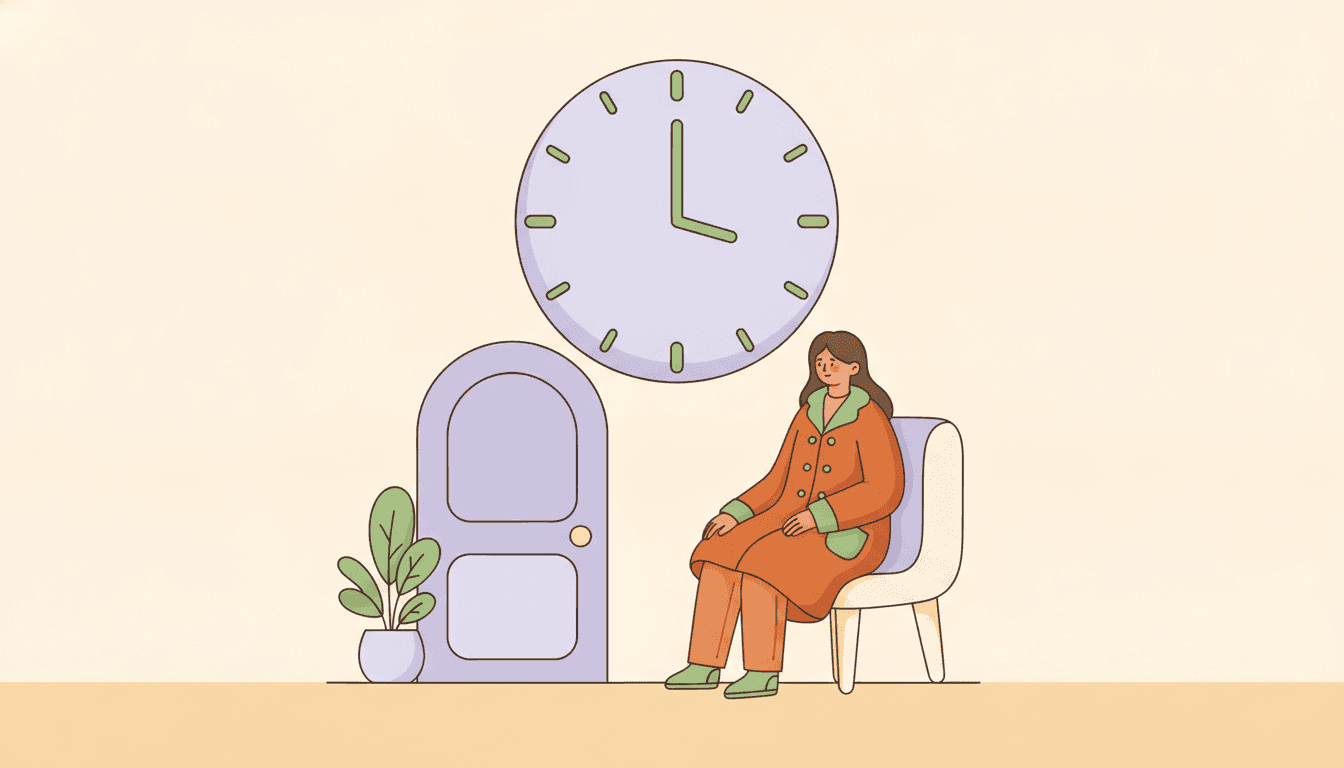
You have a dentist appointment at three in the afternoon. It is currently nine forty in the morning. That is more than five hours — an entire working day, really — and you know, in the part of your brain that does arithmetic, that you could write the report, answer the emails, and still have time to eat lunch before you need to leave. You know this. And yet you will do none of it. You will refresh your inbox. You will start something and abandon it. You will check the clock, and it will be nine fifty-one, and you will check it again.
At two forty-five you will leave for the dentist, and at four you will come home, and the day will be gone, and you will not be able to point to a single thing that took it.
What Is ADHD Waiting Mode?
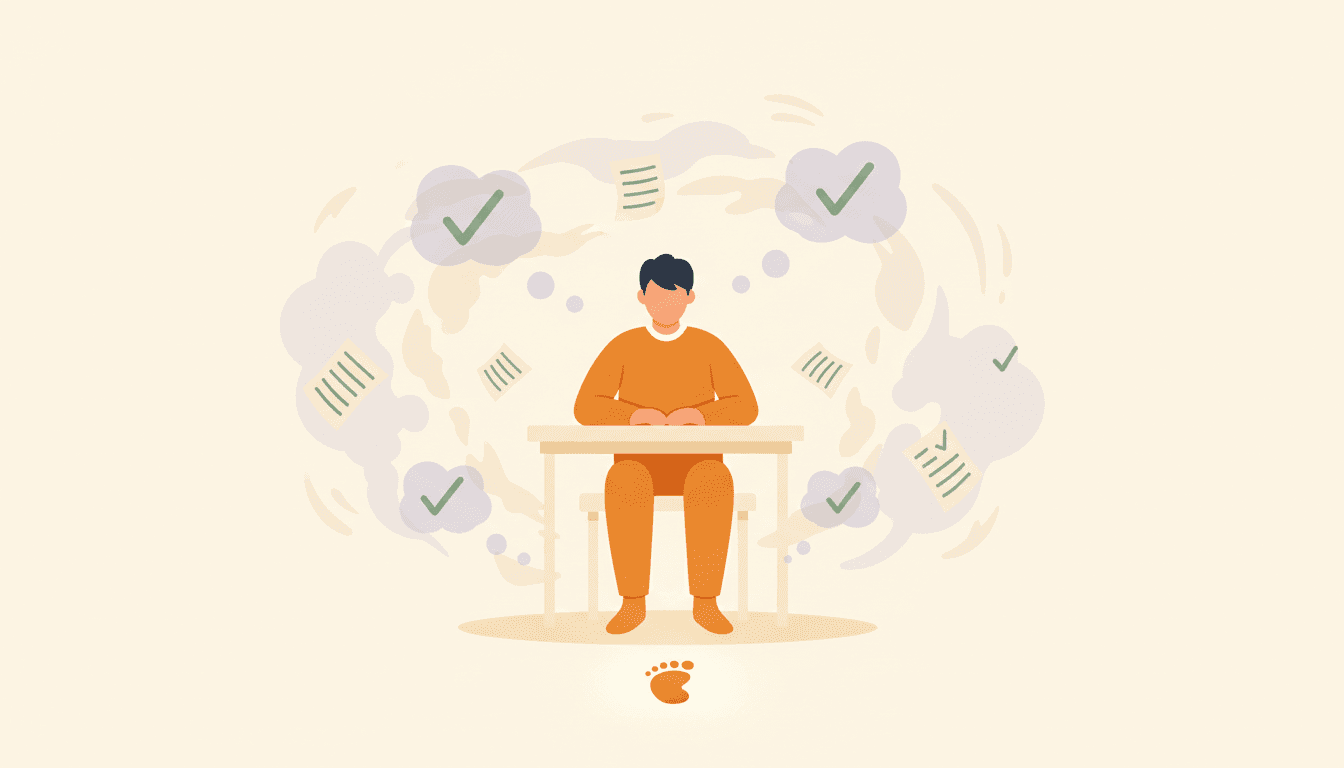
ADHD waiting mode is the state of being mentally occupied by an upcoming event to the point where nothing else can start. It is not anxiety about the event itself — it happens before pleasant appointments too — and it is not a choice to procrastinate. It is what happens when a scheduled commitment takes up residence in working memory and cannot be set down, leaving too little capacity to initiate anything that is not the thing you are waiting for.
The tell is that the size of the appointment has nothing to do with the size of the loss. A ten-minute phone call at four o'clock can consume the same day a job interview would.
The Neuroscience: Why Your Brain Refuses to Put It Down
Russell Barkley's account of ADHD as a disorder of executive function rather than attention is the most useful frame here. In that model, working memory is not just a scratchpad for remembering phone numbers; it is the workspace where you hold the future steady enough to act on it. It is how you keep a goal alive while you do something else.
That workspace is measurably smaller in ADHD brains. So when you load a high-stakes future commitment into it — do not miss this, do not lose track of time, do not be late — the commitment does not sit quietly in a corner. It occupies most of the available room. What is left is not enough to hold a second complex task in mind, which is precisely what starting a report requires.
There is a second mechanism stacked on top of it. Many people with ADHD experience time as binary rather than continuous: there is now, and there is not-now, with very little texture in between. An appointment at three is not five hours away in any felt sense. The moment it enters awareness, it becomes *now* — and you cannot work around something that is already happening.
That last part is the crux. A neurotypical brain hands the appointment to an internal sense of elapsed time and gets on with its day. An ADHD brain, having been repeatedly betrayed by that internal sense, keeps the appointment in conscious awareness where it can see it. The vigilance is not irrational. It is expensive, but it is not irrational.
Common Signs You Might Recognize
- The whole day is forfeit, not just the hour. A single afternoon commitment writes off the morning as well, even though the morning was genuinely free.
- You cannot start anything longer than the gap. You will not begin a task that might overrun, so you begin nothing, and the gap passes anyway.
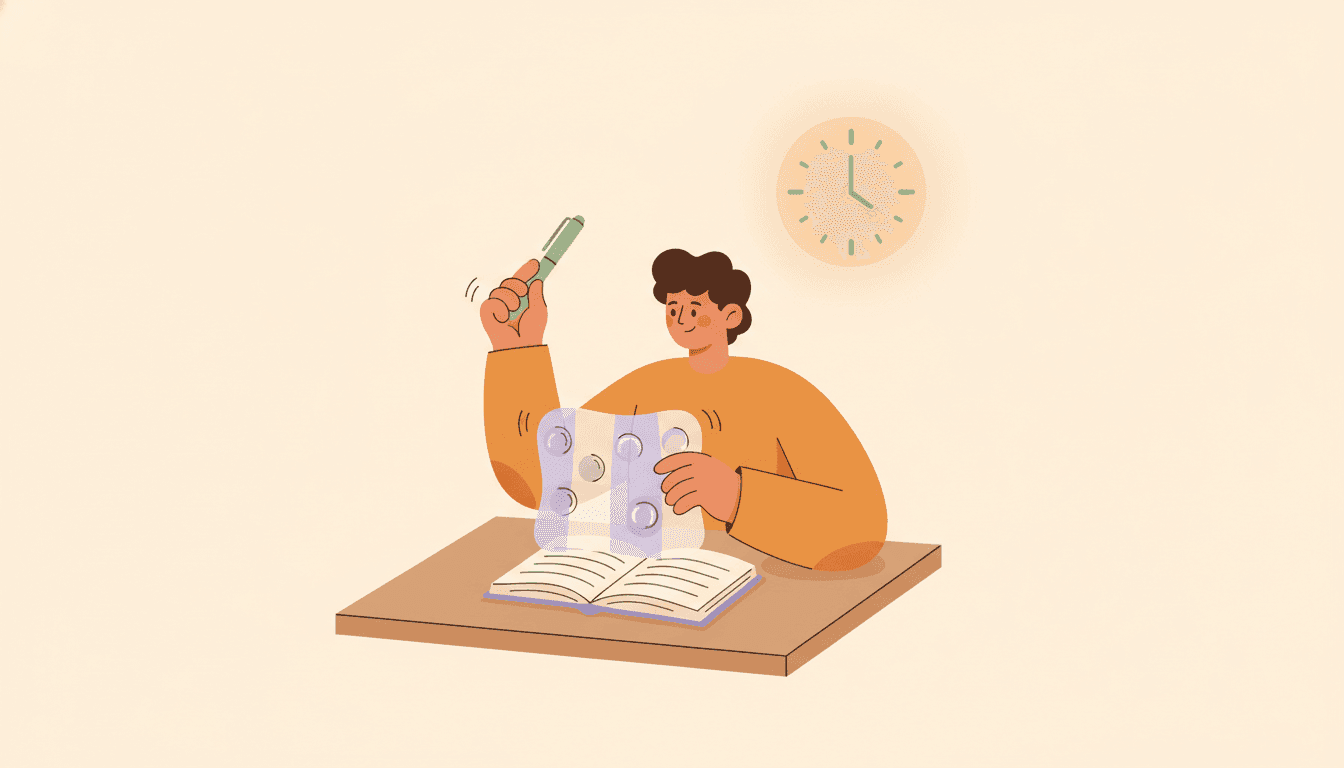
- Compulsive clock-checking that provides no relief. You look, you register the time, and within ninety seconds you have no idea what it said.
- It happens for good things too. Dinner with a friend you are excited about will eat the same afternoon as a difficult meeting.
- You arrive absurdly early, or you arrive late. Both come from the same place: the plan was never a plan, it was vigilance.
- Low-stakes filler feels safe. Scrolling, tidying one drawer, rereading the same three emails — activities you can abandon instantly without cost.
Why "Just Set an Alarm" Does Not Fix It
This is the advice everyone offers, and it is not wrong so much as incomplete. An alarm solves the wrong problem. It guarantees you will be told when to leave, which addresses the risk of missing the appointment — but waiting mode is not really about missing the appointment. It is about the cost of guarding against missing it.
For an alarm to release the vigilance, you have to genuinely believe it will fire, and that you will hear it, and that you will act on it. Most people reading this have been failed by an alarm they slept through, dismissed while half-awake, or set for the wrong day. The belief is not there, so the vigilance does not lift, and you end up with both the alarm *and* the clock-checking.
What actually helps is not one louder alarm. It is enough steady external signal that your brain stops needing to keep its own count.
How to Get the Day Back
Name it out loud when it starts.
The first move is recognition, because waiting mode is nearly invisible from the inside — it feels like being unfocused, and unfocused feels like a character flaw. Saying "I am in waiting mode" reclassifies the last two hours from personal failure to known phenomenon. That reclassification is not a consolation prize. It is what stops the shame spiral that makes the next two hours worse.
Shrink the wait, do not fill it.
The instinct is to cram the gap with productive work to redeem it. That usually fails, because the gap is not the problem — the open loop is. Instead, do everything that must happen before you leave *right now*: shoes by the door, bag packed, route checked, keys in your hand. Waiting mode is largely the brain protecting against unfinished preparation. Finish the preparation and a surprising amount of the pressure lifts.
Give the wait a shape that ends.
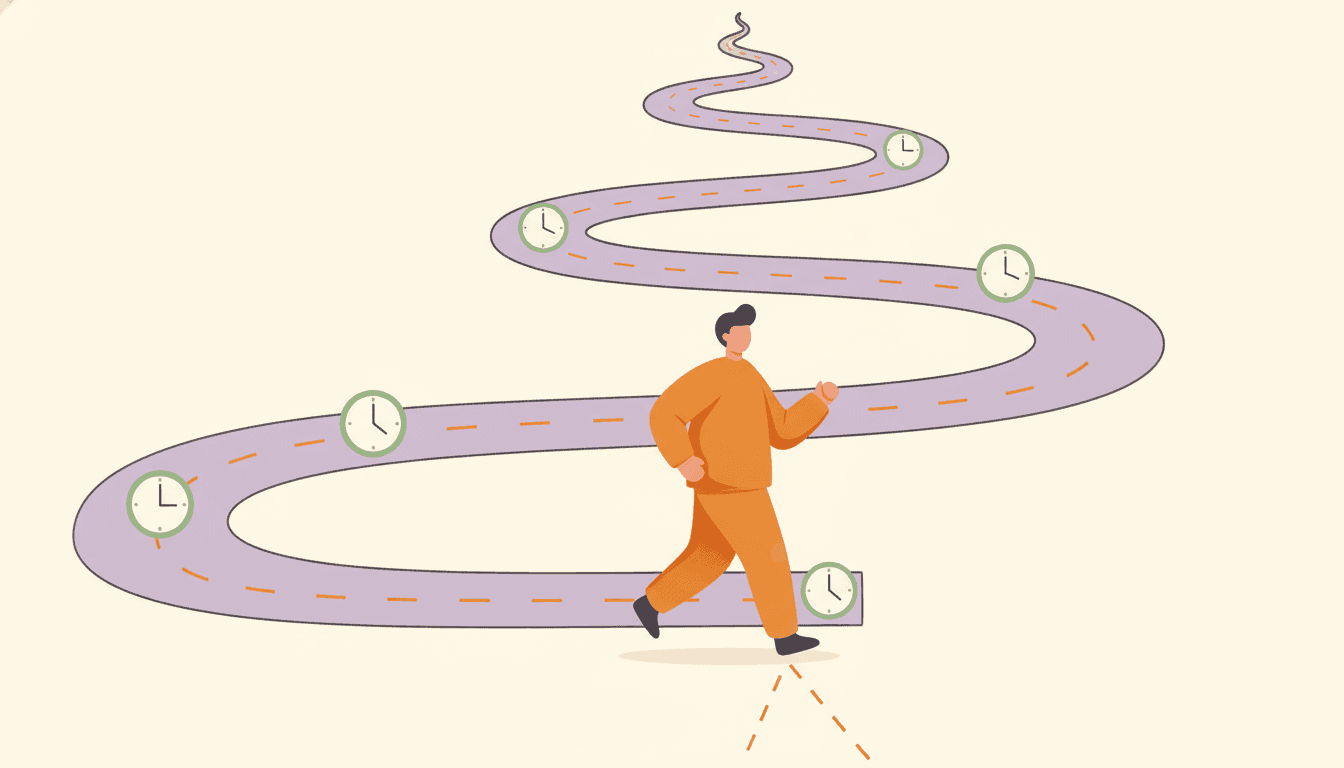
Undifferentiated time is what your brain cannot navigate. Two hours of "free time before the dentist" is unusable; two twenty-five-minute blocks with a break between them is a container. The point is not productivity. It is that a block has an ending, and an ending is something an ADHD brain can perceive.
Build an external clock you do not have to check.
This is the structural fix. If something outside your head marks the hour — audibly, without you asking — the mental thread holding the appointment can finally be put down, because something else is holding it. This is the whole idea behind TimeAware: a gentle audio cue on the hour, so time keeps moving in the background whether or not you are tracking it. The goal is not to remind you of the appointment. It is to make the passage of time perceptible so you no longer have to manufacture it through vigilance.
Pick work that survives being interrupted.
Some tasks tolerate a hard stop and some do not. Deep analytical work does not. Answering short emails, tidying a spreadsheet, folding laundry, a walk — these can be dropped mid-motion without loss. On a waiting-mode day, deliberately choose the interruptible ones rather than trying and failing at the deep work and calling the day wasted.
Stop scheduling into the middle of the day.
The single highest-leverage change is not a coping strategy at all — it is a calendar policy. An appointment at eleven or at four costs you one block. An appointment at one or two costs you the entire day. If you have any say in when things happen, push them to the edges. Batching several commitments onto the same afternoon costs one ruined day instead of three.
Treat the recovery hour as real.
Coming home from an appointment is a transition, and transitions are their own kind of expensive. Plan for the hour after, rather than expecting to walk in the door and resume. Blaming yourself for the lost hour costs more than the hour did.
A Kinder Frame
The thing worth holding onto is that waiting mode is evidence of effort, not the absence of it. You are not losing the day because you do not care about the appointment. You are losing it because you care enough to guard it with a mental process that runs continuously and cannot be delegated — and because, for most of your life, nothing else has reliably held time for you.
The day is not lost to waiting. It is spent keeping something safe that should never have needed carrying.
That is a solvable problem, and it is solvable from the outside. When time becomes something you can hear rather than something you have to hold, the vigilance has somewhere else to go — and the hours before three in the afternoon come back.
Frequently asked questions
Is ADHD waiting mode a real diagnosis?
No. Waiting mode is a community term, not a clinical one, and it does not appear in any diagnostic manual. It describes a genuine and widely reported experience that sits at the intersection of working-memory limits, time perception differences, and difficulty with task initiation — all of which are well documented in ADHD research. The term is useful because it names something specific; it is not a diagnosis.
Why does waiting mode happen even for events I am looking forward to?
Because it is a working-memory phenomenon rather than an anxiety one. The brain is holding an open loop — a commitment at a fixed future time that must not be missed — and the emotional flavour of the event does not change how much room that loop takes up. Dinner with a close friend and a difficult dentist appointment occupy the same mental space.
How is waiting mode different from procrastination?
Procrastination is avoidance of a specific task, usually one that feels unpleasant or overwhelming. Waiting mode is not attached to any task at all — you are not avoiding the report, you simply cannot get to it, and you would have the same trouble with a task you actively wanted to do. Procrastination has a target; waiting mode does not.
Does setting an alarm actually help?
It helps with the narrow problem of missing the appointment, but usually not with the lost hours. An alarm only releases the mental vigilance if you genuinely trust it, and most people with ADHD have been let down by alarms often enough that the trust is not there. A steady ambient signal of time passing tends to do more than a single alarm at the end.
Why do I lose the whole day to a ten-minute phone call?
Because the cost of waiting mode scales with the fact of the commitment, not its size or duration. A fixed point in the day that you must not miss creates the same open loop whether it lasts ten minutes or three hours. This is why people with ADHD often find a day with one small appointment harder than a day with none.
Does medication resolve waiting mode?
Some people find that treatment reduces it, often indirectly by improving working memory and task initiation. Many people find it persists regardless. Waiting mode is not a symptom that treatment targets directly, so environmental scaffolding — preparing early, shaping the gap, externalising the passage of time — usually stays useful either way. Any questions about treatment are worth raising with your prescriber.
What is the single most effective change to make?
For most people it is a scheduling change rather than a coping strategy: move appointments to the beginning or end of the day and batch them together. An appointment at one in the afternoon costs a whole day; the same appointment at nine costs an hour. This is unglamorous, requires no willpower, and tends to outperform every in-the-moment technique.